

When trouble hits, your brain wants one thing: a plan. This is that plan. We’ll show you how to escape the car in the most common emergencies—water, fire, rollovers, downed power lines, pileups—and how to prepare before anything happens. Short sentences. Clean steps. Practical tools. By the end, you’ll have a mental checklist you can run even with shaking hands. Because the moment you need to escape the car, you won’t have time to Google.
Mindset First: You’re the System, Not the Passenger
Panic steals seconds. Systems give them back. Breathe once. Name the hazard. Act.
- See it (water, fire, smoke, wires, traffic).
- Decide fast (window, belt, kids, exit).
- Move deliberately (simple steps, short words).
In every scenario, three anchors help you escape the car: unbuckle, open/break a window, get everyone out—fast.
Core Gear: The Little Tools That Save Big Time
Keep a seat-belt cutter + window breaker within arm’s reach—visor clip, steering column mount, or driver’s door pocket. Not the glovebox. If you must escape the car quickly, you won’t reach a locked drawer.
- Tool type: spring-loaded center punch or hammer-style with a pointed tip (for tempered glass), plus a protected razor slot for belts.
- Backup: one tool for the driver, one for the front passenger.
- Training: practice the motions on an old belt scrap so your hands remember.
Scenario 1: Car in Water (Flood, Bridge, Boat Ramp)
Water demands urgency. Think “Belt–Window–Kids–Out”—all in the first 30–60 seconds.
Step-by-step
- Belt: Unbuckle yourself first. You are the helper.
- Window: Open immediately while power still works. If it won’t, break a side window with your tool—aim at the lower corner, not the center.
- Kids: Oldest out first, then younger. Remove children from their car seats; don’t wrestle the seats themselves. Hand them through the window.
- Out: Go feet-first through the side window. Swim away from the car and up.
Important notes
- Doors resist opening until the cabin fills; don’t waste time yanking. If windows are laminated and won’t break, the last resort is to wait as water rises, exhale, and push the door once pressure equalizes.
- Many modern cars have laminated front side windows. Know your car: a small “laminated” icon on the glass is your clue. If laminated, try the rear side window or sunroof if tempered.
- Call for help after you’re out. Those first seconds belong to action, not a phone.
This is the hardest moment to stay calm. Keep repeating the plan: belt, window, kids, out. It’s how you escape the car in water.
Scenario 2: Car on Fire or Filling with Smoke
Fire grows fast. Seconds count.
Step-by-step
- Signal and stop safely, engine off, keys left in car.
- Belt off.
- Doors/windows open immediately—smoke blinds; keep your airway low as you exit.
- Everyone out and moves 100 feet upwind.
- Call for help and do not reopen the hood—air feeds fire.
If a belt jams, cut at a 45° angle near the buckle with your tool. No heroics with extinguishers if the fire is past a tiny flame—distance is your friend.
Scenario 3: Downed Power Lines on the Car
Electricity changes the rules.
- If lines are on the car and there’s no fire, stay inside, belt on, call for help. The car is your safe zone.
- If you must exit due to fire, jump clear—don’t touch the car and ground at the same time. Land with feet together and bunny hop away at least 35 feet to keep your feet at the same electrical potential.
It feels strange. Do it anyway. That’s how you escape the car without becoming a ground path.
Scenario 4: Rollover or Severe Crash
Rollovers disorient. The roof can be crushed. Glass can be gone.
During the roll
- Sit back, head against headrest. Keep arms in; don’t brace the roof.
- After movement stops: breathe, check for fuel smell, check for fire, speak in short commands.
Exit
- Belt off (support your weight so you don’t fall onto glass or passengers).
- Doors may be jammed; try every one.
- Windows—break remaining side glass if needed.
- Kids—unbuckle and lift clear, keeping faces away from sharp edges.
- Move upwind from leaking fluids.
If you’re pinned, make noise, use your phone, honk in intervals. Conserve energy. Help finds patterns.
Scenario 5: Multi-Car Pileup or Highway Spin
Traffic is the hazard now.
- If your car still moves, steer to the shoulder or median and stop.
- If stuck in-lane, turn on hazards, unbuckle, look before opening any door.
- Exit to the passenger side away from traffic if possible and move behind a barrier, never in front of the car.
- If you carry road flares or triangles and it’s safe, place them; otherwise prioritize people over gear.
In chaos, simple rules keep you safe: move sideways, not forward; metal protects, then distance protects more.
Jammed Belts, Child Seats, and Tricky Doors

- Jammed belt: Cut near the latch, shallow angle, smooth pull. Avoid sawing near skin.
- Child seats: Press the red button firmly. If stuck, cut straps at the shoulder and crotch to free the child—practice where those straps are in your own seat.
- Door won’t open: Try another door, then a window. Sunroofs count. Hatchbacks often open even if a side door doesn’t.
Rehearsal matters. Once. In your driveway. That 10-minute drill will live in your muscles when you need to escape the car.
Night, Winter, and Flood Add-Ons
- Night: Use dome light, not phone flashlight first; it preserves night vision and your phone’s battery.
- Winter: Gloves in door pocket, thin layers under a coat (bulky coats interfere with belts). Keep a compact blanket and chemical warmers.
- Flood roads: Turn around, don’t enter moving water. Six inches can sweep tires; two feet can float most vehicles. If water rises around you, go straight to the water plan: belt, window, kids, out.
The weather turns small mistakes into big. Respect it and you won’t need to escape the car at all.
Inside the Trunk? Here’s Your Path Out
Most modern cars have a glow-in-the-dark trunk release handle inside. Look high, center, or on one side near the latch.
- Pull it. Push the lid.
- No handle? Remove the carpeted panel and pull the cable leading to the latch.
- Older sedans: kick out the center brake-light housing, then signal and shout.
Teach kids about the trunk release as a game. Make it normal, not scary.
Medical Moments: After You’re Out
Adrenaline hides injuries. Once you escape the car:
- Count heads.
- Scan for bleeding. Direct pressure beats fancy moves.
- Neck/back pain? Stay still unless fire/flood forces movement.
- Cold or shocky? Lay flat, elevate legs if no trauma to head/chest, keep warm.
Call for help early, but only after leaving immediate danger.
Your 60-Second Drill (Practice Once, Remember Forever)
- Say it out loud: “Belt, window, kids, out.”
- Reach blind for your cutter/hammer with both hands.
- Touch-test each child seat buckle and strap path.
- Point to two exit windows and the sunroof.
- Check for laminated icons on the side glass so you know which window breaks.
If you can do that in calm weather, you can do it in chaos.
Prevention Is Easier Than Escape
- Phone down. Attention is your best safety tool.
- Space cushion. Time buys options.
- Heavier weather, lighter speed.
- Know your glass. Laminated vs tempered matters.
- Fuel and fluids. A healthy car catches fewer fires and stalls less in floods.
The best way to escape the car is to never need to. But life happens. Prepared beats lucky.
Quick Reference Cards You Can Screenshot
Water
- Belt off → Window open/break → Kids out oldest to youngest → Out feet-first → Swim away
Fire/Smoke
- Stop safe → Belt → Doors/windows → 100 ft upwind → Don’t open hood
Power Lines
- Stay in unless fire → If exiting: jump clear, feet together, hop away
Pileup
- Move to shoulder if possible → Hazards → Passenger-side exit → Get behind barrier
Rollover
- Protect head → Belt off carefully → Try all doors → Break side glass → Move upwind
Read it once a month. Let it become automatic.
Family Coaching: Turning Fear into Skill
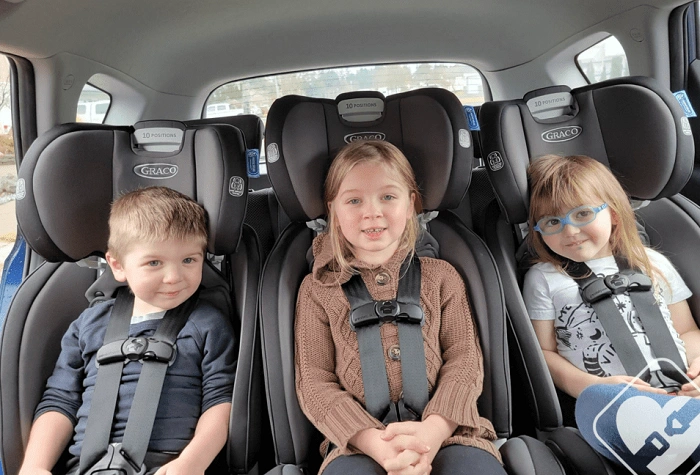
- Make it a “safety night.” Teach kids short commands: “Hands to me. Eyes here. Out the window.”
- Assign roles. The driver handles tools and the oldest child; the passenger handles the youngest.
- Practice buckles. Let kids press their own buttons in calm times so the motion isn’t new.
Courage grows in rehearsal. It’s how families escape the car together.
Packing the Minimalist “Escape Kit”
- Seat-belt cutter/window breaker (x2)
- Slim flashlight with strobe
- Compact first-aid (gloves, gauze, tape)
- Space blanket, two chemical warmers
- Whistle on a lanyard
- Copy of the quick reference cards
Place it where hands find it without thinking.
Common Mistakes (And What to Do Instead)
- Calling first, acting second. Reverse it: act, then call.
- Fighting a door in water. Go to the window first.
- Hunting the glovebox tool. Mount it where your fingers fall naturally.
- Yanking a child seat out in water. Release the child, not the seat.
- Touching car and ground under power lines. Jump clear; hop away.
Tiny corrections. Huge outcomes.
When Help Arrives
- Wave responders to the hazard (leak, wires, injured).
- Answer in headlines: where, what, how many.
- Step back. Let trained hands take over. You already did the brave part: you managed the first minute to escape the car.
Frequently Asked Questions (FAQs)
What if my windows are laminated and won’t break?
Open power windows immediately. If nothing opens, try the rear side window or sunroof. As a last resort, wait for pressure to equalize, exhale, and push the door.
Where should I keep an escape tool?
Within reach of your driving position—visor, column, or door pocket. Not the glovebox. Mount a second tool for the front passenger.
Should I cut my seat belt or try the button first?
Always try the button. If it jams or you can’t find it in smoke or water, cut at a 45° angle near the latch.
In a flood, is it safer to stay or go?
If water is entering the car, act fast. Use the water plan: belt, window, kids, out—before electronics fail and pressure builds.
How do I prepare kids without scaring them?
Make it a game. Short scripts, simple jobs. Praise the calm. Confidence beats fear.