

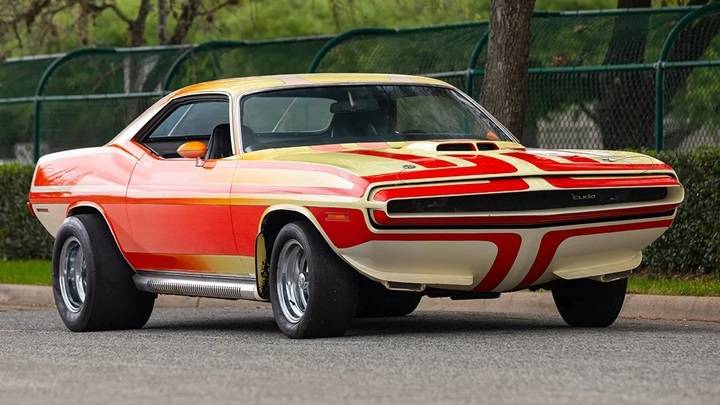
The Plymouth Barracuda. Bold. Powerful. An icon of the muscle car era. Originally introduced in 1964, the Barracuda evolved from a sporty compact to a full-fledged muscle machine. By the time the third-generation model arrived in 1970, the Barracuda was one of the most aggressive and sought-after performance cars of its time. Today, it’s a collector’s dream, with high-performance variants commanding top dollar at auctions.
Why Consider the Plymouth Barracuda?
A Quick Snapshot
Engine Options:
- 1964-1966: 2.8L Inline-6 to 4.5L V8
- 1967-1969: 3.7L Inline-6 to 7.2L V8 (440 Magnum)
- 1970-1974: 6.3L, 7.0L HEMI V8 (425 hp), and other V8 options
Transmission:
- 3-speed manual
- 4-speed manual
- 3-speed automatic
0-60 MPH:
- As quick as 5.6 seconds (HEMI-powered models)
Top Speed:
- Up to 140 mph (depending on engine choice)
Drivetrain:
- Rear-Wheel Drive (RWD)
The Plymouth Barracuda was built for speed, muscle, and attitude. Let’s break it down further.
Driving & Performance

The Feel Behind the Wheel
Turn the key. The V8 rumbles to life. Whether you opt for a 340, 383, 440, or the legendary 426 HEMI, the Barracuda delivers exhilarating performance.
The 4-speed manual transmission transforms the driving experience, putting complete control in the driver’s hands. Handling is typical for a muscle car—raw power, rear-wheel drive, and a bit of tail-happy fun. The HEMI models were built for drag racing, while the smaller V8s provided a balanced mix of performance and everyday usability.
Fuel Economy
- Small-block V8s: Around 12-15 MPG
- Big-block V8s & HEMI: 8-12 MPG
If you’re buying a Barracuda, fuel efficiency isn’t the priority—it’s all about power.
Interior & Comfort
Cabin & Seating
The Plymouth Barracuda’s interior is all about function and muscle car simplicity, but with a touch of style.
- High-back bucket seats
- Woodgrain or pistol-grip shifter (depending on trim)
- Classic Mopar Rallye gauges
- Optional center console with performance readouts
Space & Practicality
For a muscle car, the Barracuda was reasonably spacious for two passengers, though rear seats were tight.
Interior Dimensions
| Feature | Measurement |
| Front Headroom | 37.0 inches |
| Front Legroom | 41.8 inches |
| Rear Headroom | 35.5 inches |
| Rear Legroom | 29.5 inches |
| Cargo Space | Small trunk (varied by year) |
It wasn’t built for storage, but it had enough room for weekend trips or a spare set of drag radials.
Tech & Safety Features
What’s Inside?
For a late ‘60s and early ‘70s muscle car, the Barracuda had minimal technology, but it did offer:
- AM/FM radio (optional 8-track player)
- Tachometer and full gauge cluster
- Woodgrain accents on higher trims
- Fold-down rear seat for extra cargo room
Safety First
Muscle cars weren’t known for safety, but the Barracuda had:
- Front disc brakes (optional on earlier models, standard on later years)
- Lap belts (no airbags)
- Steel-reinforced frame
- Limited-slip differential (optional)
Safety Ratings (NHTSA ratings were not available for classic muscle cars)
| Category | Rating |
| Crash Safety | Not Rated |
| Side Impact | Moderate (due to frame strength) |
| Rollover Risk | High (short wheelbase, high power) |
While safety was an afterthought in the muscle car era, the Barracuda’s solid body and reinforced frame provided some protection.
Comparisons & Alternatives
How does the Plymouth Barracuda compare to other muscle cars of its time?
- Ford Mustang? The Mustang had more production numbers, but the Barracuda was rarer and more aggressive in later years.
- Chevrolet Camaro? The Camaro had strong performance, but the Barracuda’s big-block 440 and HEMI options gave it an edge.
- Dodge Challenger? The Challenger and Barracuda shared platforms, but the Barracuda had a sportier, slightly smaller feel.
The Barracuda stands out for its bold styling, powerful engine choices, and Mopar heritage.
FAQs
1. How much does a Plymouth Barracuda cost today?
Prices vary widely based on model and condition:
- Early 1964-1966 models: $20,000-$40,000
- 1967-1969 Fastbacks: $30,000-$75,000
- 1970-1974 High-performance models: $75,000-$250,000+ (especially HEMI variants)
2. What’s the rarest Barracuda?
The 1971 HEMI ‘Cuda Convertible is one of the rarest, with only 11 units produced, making it one of the most valuable muscle cars ever.
3. Is the Plymouth Barracuda a good investment?
Yes. With rising classic car values, especially for Mopar muscle cars, well-maintained Barracudas are appreciating in value.
4. What is the difference between the ‘Cuda and Barracuda?
The ‘Cuda was the high-performance trim with bigger engines, better suspension, and sportier looks. The base Barracuda was more of an entry-level model.
5. Can you drive a Barracuda?
Technically, yes—but expect poor fuel economy, a stiff ride, and high maintenance costs. It’s better as a weekend or collector’s car.
Final Thoughts
The Plymouth Barracuda is one of the most legendary American muscle cars, known for its powerful V8 options, aggressive styling, and rarity. Whether you’re a collector or a Mopar enthusiast, owning a Barracuda is a statement of classic muscle car dominance.
If you want a head-turning, high-performance muscle car with legendary status, the Plymouth Barracuda is an unbeatable choice.