


Fielding ground balls is a fundamental skill that can distinguish an outstanding defensive player from an average one in baseball. If you’re aspiring to be an adept infielder, learning to properly field ground balls is crucial. This guide will walk you through the essentials, providing expert tips and techniques to help you master the art of fielding ground balls.
Ground Balls

A ground ball is a batted ball that rolls or bounces across the infield or outfield grass. Infielders are often challenged to cleanly field these grounders and throw to first base in time for an out. Outfielders need to ensure the ball doesn’t roll past them into extra-base territory, which could result in significant advancement for the opposing team.
Mastering the art of fielding ground balls is essential for all defensive players. It involves athleticism, focus, and good decision-making to prevent errors and turn challenging grounders into smoothouts.
Understanding Ground Balls
Before delving into the fielding techniques, it’s essential to understand the nature of ground balls:
Routine Ground Balls: These are generally slower, easier-to-handle balls that roll smoothly on the ground.
Choppers: Balls that bounce high after hitting the ground, often requiring more agility to field.
Slow Rollers: Softly hit grounders that require a quick charge by the fielder.
Hard-Hit Grounders: Fast-moving balls that require a rapid reaction to field cleanly.
Each type of ground ball requires a specific approach to field correctly.
Pre-Game Preparation
Successful fielding starts before the game begins:
Stretching and Warm-Up: Proper stretching and warm-up exercises improve flexibility and minimize the risk of injuries.
Ground Ball Drills: Incorporate practice drills, such as short hops or backhand plays, to simulate game scenarios.
Field Inspection: Check for uneven patches or obstacles on the infield that might affect the ball’s movement.
Key Principles of Ground Ball Fielding
Anticipation and Positioning: Proper positioning is the first step in successfully fielding ground balls. Understanding your opponent’s tendencies, the pitcher’s pitch selection, and the defensive shift will help you predict where grounders are most likely to be hit.
Get Into an Athletic Stance: Your stance determines your mobility and readiness. Stand with your knees bent, feet shoulder-width apart, and hands positioned in front. Be light on your toes so you can quickly react.
Read the Ball: As the ball is hit, quickly determine its trajectory and speed. This will help you decide whether to charge forward, move laterally, or play back on the ball.
Approach the Ball: Move towards the ball in a controlled manner while keeping your eyes focused. Break down into your fielding stance, taking short, choppy steps.
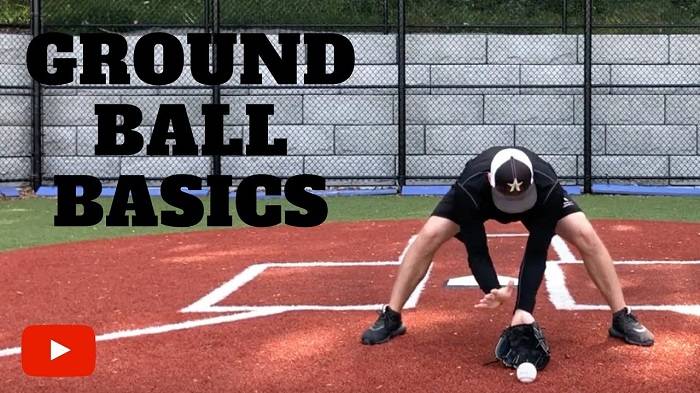
Field the Ball Out Front: Extend your glove arm forward, creating a “triangle” with your two legs and glove. The ball should enter the glove smoothly without unnecessary hand or body movements.
Secure the Ball: Once the ball is in your glove, secure it with your bare hand on top. This prevents the ball from bouncing out.
Make the Throw: After fielding the ball, bring the glove and ball close to your body. Transfer the ball to your throwing hand quickly and get into a throwing position with your body aligned toward your target.
Follow Through: Follow through on your throw with a step toward the target to maintain accuracy and strength.
Advanced Techniques
Backhand Fielding: For balls hit to your glove side, practice backhanding. Pivot your hips and reach across your body with your glove. Angle your glove to form a wall against the ball.
Charging Grounders: For slow rollers, you will need to charge aggressively. Approach the ball quickly, field it with a bare hand if necessary, and transition smoothly into the throw.
Double Plays: If turning a double play, position your feet strategically to receive the throw while transitioning smoothly for the pivot and throw to first base.
Short Hops: Some grounders may hop right before reaching you. To handle these effectively, move toward the ball, reducing the bounce’s impact while fielding securely.
Mental Aspects and Common Challenges

Mental Focus: Stay focused on the game situation. Understanding the number of outs, the inning, and the runners on base will help you decide the best play to make.
Confidence: Trust in your training and ability. Approaching grounders with confidence improves your timing, technique, and decision-making.
Common Errors: Watch out for mistakes such as playing the ball too deep or not getting into an athletic stance. Practice drills can minimize these errors.
Drills and Exercises
Fielding Routine Grounders: Practice routine grounders, gradually increasing speed and difficulty to improve your reflexes.
Backhand Drills: Set up cones or markers and practice backhand fielding with partners or a coach hitting you.
Short Hop Practice: Use a tennis ball or small rubber ball to practice handling short hops by bouncing them off a wall or partner.
Charging Slow Rollers: Roll slow balls toward yourself or your partner and practice charging forward for a clean pick-up.
Quick Hands: Rapidly transfer balls between your glove and throwing hand to improve speed.
Equipment and Gear
Glove: Ensure your glove is the right size for your position. An infielder’s glove is typically smaller for quick transfers, while outfield gloves are longer for range.
Cleats: Invest in good quality cleats that offer both grip and mobility.
Fielding Masks: Youth players may consider using a fielding mask to protect their face during drills or games.
Related Post:
The Strategic Role of the Cleanup Hitter: Understanding the Fourth Slot in a
Mastering the 4-Seam Fastball Grip: The Ultimate Guide for Pitchers
Choosing the Perfect Bat Size for a 7-Year-Old: A Comprehensive Guide
Understanding the Balk in Baseball: A Comprehensive Guide
Mastering how to field ground balls effectively is a journey that requires practice, patience, and attention to detail. Whether you’re just starting or polishing your game, the techniques and drills outlined in this guide will help you improve your fielding performance.
Get out on the field and practice, and soon, you’ll become a more reliable fielder who teammates can count on for consistent defensive plays.
Fielding ground balls requires dedication and practice. By understanding the different types of ground balls and following proper techniques, players can become more reliable and confident defenders. A strong infield defense can be the backbone of a winning team, and mastering the art of fielding ground balls is an integral part of that success. So get out there, hit the practice field, and become a defensive powerhouse for your team!