


Soccer, known as football in most parts of the world, is a sport that captivates millions with its dynamic gameplay, strategic maneuvers, and electrifying goals. Central to its essence is the arrangement of players on the field, each contributing uniquely to the team’s success. Have you ever wondered how many players are on the field during a soccer match and why that number is significant? Let’s delve into the intricacies of soccer formations, player roles, and the tactical nuances that make this beautiful game so compelling.
Soccer, often referred to as the beautiful game, captivates millions worldwide with its blend of skill, strategy, and teamwork. One fundamental aspect of soccer that dictates its flow and tactics is the number of players on the field at any given time. From amateur leagues to professional tournaments, understanding player numbers is crucial for players, coaches, and fans alike. In this comprehensive guide, we delve into the intricacies of soccer player numbers on the field, exploring formations, positions, and the strategies behind them.
Traditional Player Numbers:

Traditionally, a standard soccer match features 11 players from each team on the field simultaneously. These players are typically divided into different positions, each with specific roles and responsibilities. The traditional formation consists of a goalkeeper, defenders, midfielders, and forwards.
A.Goalkeeper:
The goalkeeper is the last line of defense, responsible for preventing the opposing team from scoring goals. They have special privileges, such as handling the ball with their hands within the penalty area.
B. Defenders:
Defenders play a crucial role in protecting their team’s goal. They aim to intercept passes, block shots, and disrupt the opposition’s attacking plays. Defenders can include center-backs, full-backs, and wing-backs, depending on the team’s formation.
C. Midfielders:
Midfielders occupy the central area of the field, acting as the link between defense and attack. They are tasked with controlling possession, distributing the ball, and supporting both defensive and offensive phases of play.
D. Forwards:
Forwards, also known as strikers or attackers, are primarily responsible for scoring goals. They use their speed, skill, and tactical awareness to create scoring opportunities and capitalize on them.
Variations in Player Numbers:
While the traditional setup involves 11 players per team, variations exist depending on the format of the game and the age group of the players. Understanding these variations is essential for adapting strategies and tactics accordingly.
A. Small-Sided Games:
In youth soccer and recreational leagues, small-sided games are common, featuring fewer players on a smaller field. Formats such as 5-a-side or 7-a-side emphasize skill development, quick decision-making, and increased involvement for each player.
B. Futsal:
Futsal is a variant of soccer played on a smaller, indoor court with five players per team. The reduced playing area and player numbers lead to a fast-paced, skill-intensive game, with an emphasis on ball control and quick passing.
C. Beach Soccer:
Beach soccer is played on sandy surfaces with fewer players (typically five per team) and modified rules to suit the beach environment. It emphasizes agility, creativity, and shooting accuracy due to the challenging surface and limited space.
Tactical Formations and Player Roles:
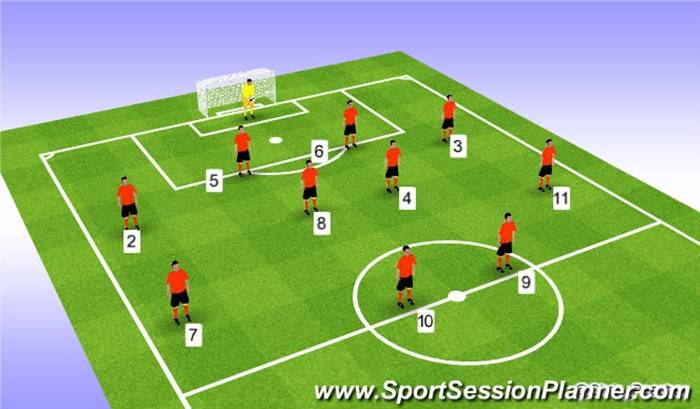
Beyond the basic player numbers, soccer teams employ various tactical formations to optimize their strengths and exploit their opponent’s weaknesses. These formations dictate the positioning of players on the field and influence team dynamics and playing styles.
A. 4-4-2:
One of the most traditional formations, the 4-4-2, consists of four defenders, four midfielders, and two forwards. It offers a balanced approach with solid defensive cover and support for attacking play.
B. 4-3-3:
In the 4-3-3 formation, there are four defenders, three midfielders, and three forwards. This setup allows for a more attacking mindset, with wingers providing width and creative freedom for the central striker.
C. 3-5-2:
The 3-5-2 formation features three defenders, five midfielders, and two forwards. It offers a compact midfield presence while providing additional attacking options through wing-backs overlapping with the midfielders.
D. 4-2-3-1:
With four defenders, two defensive midfielders, three attacking midfielders, and one striker, the 4-2-3-1 formation provides defensive stability while allowing for intricate build-up play and support for the lone striker.
Adaptability and Fluidity:
While tactical formations provide a framework for teams to operate, modern soccer emphasizes adaptability and fluidity. Coaches often instruct players to transition between formations dynamically based on in-game situations, opponent strategies, and player strengths.
A. Counter-Attacking:
Teams adept at counter-attacking exploit spaces left by the opposition when transitioning from defense to attack. Quick, incisive passes and coordinated movements can catch the opposing team off guard and lead to scoring opportunities.
B. Possession-Based Play:
Possession-based teams prioritize ball retention and patient build-up play to control the tempo of the game. Players move into space to receive passes, maintain possession under pressure, and create openings in the opposition’s defense.
C. Pressing and High Line Defense:
Some teams employ high-intensity pressing tactics, aiming to win the ball back quickly and disrupt the opponent’s passing rhythm. This aggressive approach requires coordinated movement and communication to maintain defensive solidity while pressing high up the pitch.
The Traditional Setup:
A standard soccer match features two teams, each comprised of 11 players. This configuration has become a staple of the sport, providing a balance between offense, defense, and midfield control. Within this structure, players are typically divided into specific positions, each with its own responsibilities and objectives.
Roles and Positions:
Goalkeeper (1 player):
Positioned within the goal area, the goalkeeper is tasked with preventing the opposing team from scoring by blocking shots on target and organizing the defense.
Defenders (3-5 players):
Defenders form the backbone of the team’s defense, working together to thwart attacking plays and maintain possession of the ball. They often mark opposing forwards and wingers, intercept passes, and initiate counterattacks.
Midfielders (2-4 players):
Situated between the defense and the offense, midfielders play a pivotal role in dictating the flow of the game. They are responsible for both defensive duties, such as regaining possession, and offensive duties, such as distributing passes and creating scoring opportunities.
Forwards (1-3 players):
Positioned closest to the opponent’s goal, forwards are tasked with scoring goals and putting pressure on the opposing defense. They utilize their speed, agility, and shooting ability to penetrate the opponent’s defensive line and capitalize on scoring chances.
Tactical Variations:
While the traditional setup provides a framework for team composition, soccer is a game of strategy and adaptability. Coaches often employ various formations and tactical approaches to exploit their team’s strengths and exploit the weaknesses of their opponents.
Some common formations include:
4-4-2: Four defenders, four midfielders, and two forwards.
4-3-3: Four defenders, three midfielders, and three forwards.
3-5-2: Three defenders, five midfielders, and two forwards.
These formations can be adjusted throughout the match based on factors such as the scoreline, player fitness, and tactical considerations. For example, a team trailing by a goal may opt for a more offensive formation to increase their attacking prowess, while a team protecting a lead may adopt a more defensive setup to preserve their advantage.
Substitutions:
In addition to the 11 players on the field, each team is allowed a designated number of substitutions to replace tired or injured players and introduce fresh legs into the game. Depending on the competition and governing body, teams may be permitted to make a certain number of substitutions during regulation time, with additional substitutions allowed during extra time or penalty shootouts.
Related Post:
How to Play Pickleball: Essential Tips and Strategies for Beginners
The Favorites to Win Euro 2024 Based on Bookmakers’ Odds
Who are the most expensive players in Indian cricket history?
Soccer is a sport defined by its simplicity and complexity, where 11 players on each side compete within the confines of a rectangular field to achieve victory. Understanding the roles and responsibilities of each player, as well as the tactical nuances of formations and substitutions, provides insight into the strategic intricacies of the game. Whether it’s the fluid movements of a well-executed passing sequence or the drama of a last-minute goal, soccer continues to captivate audiences around the world with its beauty, passion, and unpredictability. So the next time you watch a match, take a moment to appreciate the balletic choreography of 22 players working in harmony to create moments of magic on the field.