

If you ever watched a football game, you will probably hear the commentators talk about a pocket. The pocket plays an important factor in many rules and is an area that fans, players and coaches need to understand and be familiar with.
So you might be wondering what is the pocket in football, where it is and how it effects different rules of the game.
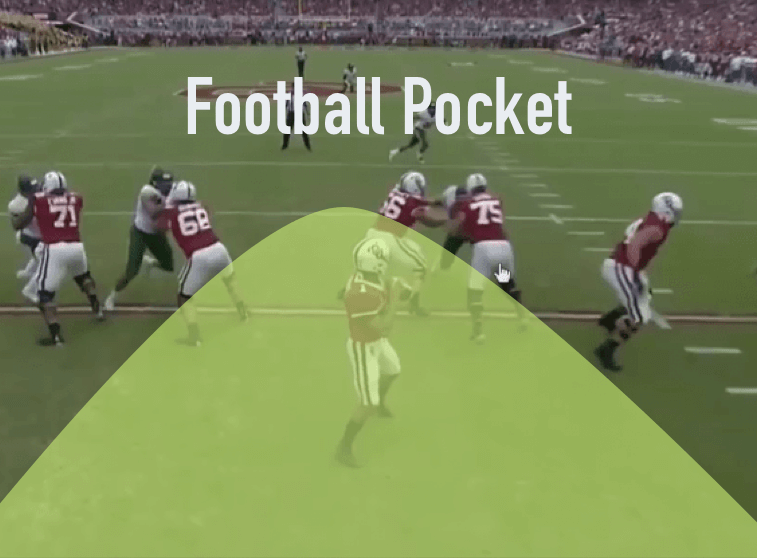
The pocket or passing pocket is a term in football that describes a U-shaped area that is behind the line of scrimmage created during a passing play. The pocket is formed when offensive linemen drop back to pass protect, creating a U-shaped zone to protect the quarterback. While in the pocket quarterbacks cannot throw the ball away and must throw to a receiver or run outside the pocket or an intentional grounding penalty may be called.
Now that we have gone over the basics. Let’s dive deeper into what a passing pocket is and how it impacts the game of football.
Football Pocket
While watching a football game the pocket might be hard to identify at first, but if you know what to look it will be easy to see. Especially if you are able to look at a paused aerial shot of a passing play.
Once the ball is snapped during a passing play, the offensive linemen drop back off the line of scrimmage creating a horse shoe shaped area to protect the quarterback from rushing defenders.
This allows the quarterback a space and enough time to find and throw the ball to an open receiver. This U-shaped area is known as the pocket or passing pocket.
According to the NFL rules the pocket area is the area between the outside edges of the normal tackle positions on each side of the center extending backward to the offensive team’s end line. After the ball leaves the pocket area, the area no longer exists. (Source: NFL Rules)
To help you get a better idea of what the pocket area looks like on the field, here is example:
As you can see in this image the pocket extends from one tackle position towards the opposite side. The backwards U-shape is created when the offensive lineman drops back to pass protect.
Even with a well blocked pass rush, the quarterback typically only has a few seconds to pass the ball within the pocket before receiving pressure from defenders.
Quarterbacks may throw within the pocket or scramble outside of the tackle box to either buy more time to find an open receiver, to avoid a sack and or to rush the ball.
Once a quarterback has left the pocket and goes outside of the tackle box they are allowed to throw the ball away if they cannot find a receiver to throw to.
However, if the passer is under pressure in the pocket and throws a forward pass without a realistic chance of completion they will be called for an intentional ground penalty. Resulting in a loss of down and a 10-yard penalty and in some cases a safety.
How Big is the Pocket in Football?
As we mentioned above the pocket is the area behind the offensive line where the quarterback drops back to pass. The pocket is roughly seven yards wide and five yards long.
The NFL is vague in their exact description and mentions the area is between the two tackles making the pocket somewhat subjective and more of a basic guideline.
What is Considered Out of the Pocket in Football?
When the pocket collapses or in other words when the quarterback’s protection breaks down, incoming defenders will force the quarterback to scramble and improvise with the football.
When the quarterback leaves the tackle box he is considered to be “out of the pocket”. This typically means intentional grounding rules no longer apply once the quarterback has left the pocket.
Intentional Grounding
Intentional grounding is a foul in football when a passer faces a possible loss of yardage because of defensive pressure and throws a forward pass without a realistic chance of completion or when the ball doesn’t go pass the line of scrimmage.
The NFL defines a realistic chance of completion as a pass that is thrown in the direction of and lands in the vicinity of an originally eligible receiver. (Source: NFL Rules)
Essentially if a passer of the football attempts to avoid a sack or loss of yardage and throws the ball that is not in the vicinity of an eligible receiver than the passer will be called for intentional grounding.
Here is the penalty for intentional grounding a few exceptions to the rule that you should be aware of:
Intentional Grounding Penalty
- Loss of down and a 10-yard penalty from the previous spot
- If the passer is in his end zone when the ball was thrown, it is considered a safety
Exceptions to Intentional Grounding
- Passer is Outside the Pocket: It is not considered grounding when a passer moves outside of the pocket and throws the ball away.
- Stopping the clock: A player under center is allowed to stop the game clock by receiving the snap and immediately throwing the ball into the ground.
- Physical Contact: Intentional grounding won’t be called if a passers throw is significantly affect by physical contact of a defensive player that causes the pass to land outside the vicinity of an eligible receiver or if it falls short of the line of scrimmage.
When Can a QB Throw the Ball Away?
Quarterbacks will often throw the ball away during broken plays or when they are unable to find an open receiver. This allows them to avoid a sack and loss of yardage. So when can QB throw the ball without receiving a penalty?
A quarterback must run outside of the pocket (outside one of his tackles on either side of the line of scrimmage) in order to legally throw the ball away. The ball must also go beyond the line of scrimmage as well.
Related Football Pocket Terms
Pocket Presence – Pocket presence is a football term used to describe a quarterback’s instincts, awareness and ability to recognize and avoid defenders inside of the pocket. Quarterbacks with good pocket presence avoid rushers by moving up and around the pocket until they can find an open receiver.
Pocket Collapse – A pocket collapse is when the offensive protection breaks down and members of the defense are within the pocket. This often results in a sack or forces the quarterback to scramble and improvise with the football.
Outside the Pocket – The phrase outside of the pocket is said when a quarterback has left the pocket by moving outside of the tackles and no longer has to worry about intentional grounding if they decide to throw it away passed the line of scrimmage.
Stepping Up in The Pocket – The term ‘stepping up in the pocket’ is when the quarterback moves up in the pocket to avoid outside rushers. This allows them to buy more time and find either an open receiver or enough space to rush for more yards.
Final Thoughts
The passing pocket is an important zone within the game of football and can influence the outcome of certain plays and can determine when a quarterback can throw the ball away without receiving an intentional grounding penalty.
Understanding what the pocket is and how it impacts rules within the game of football is critical and is a something any fan, player should know.