

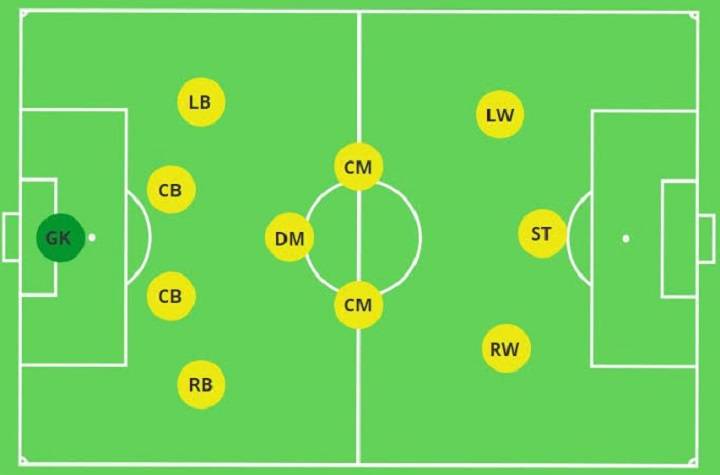
Football, the beautiful game, unfolds on vast pitches where strategic brilliance, individual skill, and teamwork converge in a symphony of passes, tackles, and goals. The intricacies of football are embodied in the diverse positions that players occupy, each with its unique responsibilities and contributions to the team. In this in-depth exploration, we unravel the nuances of every football position, examining the roles, skills, and impact that define excellence on the field.
Understanding Football Positions
The Basics: Formation and Lineup
Formation:

A football team’s formation dictates the arrangement of players on the field. Common formations include the 4-4-2, 4-3-3, and 3-5-2, each representing the number of defenders, midfielders, and forwards in the lineup. Formations vary based on a team’s style of play and tactical approach.
Lineup:
A football lineup consists of players deployed in specific positions according to the chosen formation. Each position comes with distinct responsibilities, contributing to the overall strategy and effectiveness of the team.
Defensive Positions: Goalkeeper and Defenders
Goalkeeper (GK):
The goalkeeper is the last line of defense, positioned in front of the goal. The primary role is to prevent the opposing team from scoring by stopping shots on goal. Goalkeepers also play a crucial role in organizing the defense, communicating with teammates, and initiating counterattacks with accurate distribution.
Defenders:
Defenders form the defensive line and are responsible for preventing the opposing team from advancing and scoring. The defensive line typically includes center-backs and full-backs. Center-backs focus on central defensive duties, while full-backs cover the wider areas, combining defensive responsibilities with occasional attacking support.
Midfield Positions: Playmakers and Enforcers
Central Midfielders (CM):

Central midfielders orchestrate play in the middle of the field. They are often playmakers, dictating the tempo, distributing passes, and linking defense to attack. Central midfielders need a blend of vision, passing accuracy, and defensive awareness.
Defensive Midfielders (CDM):
Defensive midfielders serve as the team’s shield in front of the defense. Their primary role is to break up opposition attacks, win back possession, and distribute the ball to more creative teammates. Defensive midfielders require strong tackling, intercepting, and passing abilities.
Attacking Midfielders (CAM):
Attacking midfielders operate in advanced central positions, serving as the creative focal point. They are tasked with unlocking opposition defenses, providing key passes, and scoring goals. Attacking midfielders combine technical flair with a goal-scoring instinct.
Attacking Positions: Wingers and Forwards
Wingers (RW/LW):
Wingers operate on the flanks, stretching the opposition’s defense and providing width. Their primary roles include delivering crosses into the box, taking on defenders one-on-one, and contributing to goal-scoring opportunities. Wingers need speed, dribbling ability, and accurate crossing.
Strikers (ST/CF):
Strikers are the goal-scoring focal point of the team. Whether playing as a central striker (ST) or a second striker (CF), their main responsibility is to score goals. Strikers need clinical finishing, positioning, and the ability to link up play with teammates.
Versatile Positions: Wingbacks and Central Defenders
Wingbacks (LWB/RWB):
Wingbacks combine defensive and attacking duties, operating as hybrid full-backs and wingers. They provide width in attack, deliver crosses, and track back to defend. Wingbacks are crucial in systems with three central defenders.
Central Defenders (CB):
Central defenders anchor the defensive line, focusing on intercepting passes, winning aerial duels, and blocking shots. They form a partnership with other defenders and the goalkeeper to maintain a solid defensive shape.
Football Formats and Position Systems
Traditional Systems: 4-4-2 and 4-3-3
4-4-2 Formation:
The 4-4-2 formation features four defenders, four midfielders, and two strikers. It is known for its balance between defense and attack, with two central midfielders, wingers, and a striking duo.
4-3-3 Formation:
The 4-3-3 formation emphasizes attacking play, with four defenders, three midfielders, and three forwards. It provides width through wingers and relies on a central striker supported by two wide attackers.
Modern Systems: 3-5-2 and 4-2-3-1
3-5-2 Formation:
The 3-5-2 formation includes three central defenders, five midfielders, and two strikers. It offers defensive solidity with wingbacks providing attacking width. The midfield often features a defensive midfielder, central midfielders, and attacking midfielders.
4-2-3-1 Formation:
The 4-2-3-1 formation features four defenders, two holding midfielders, three attacking midfielders, and a lone striker. This setup allows for a compact defense, control in midfield, and support for the central striker.
Benchmarking Football Excellence
Goalkeeper Saves and Clean Sheets
Saves Per Game:
Goalkeepers are evaluated based on the number of saves they make per game. A high saves-per-game ratio indicates shot-stopping proficiency and resilience under pressure.
Clean Sheets:
Clean sheets, or matches in which a goalkeeper concedes no goals, are a key benchmark for defensive stability. Goalkeepers and defenders collaborate to achieve clean sheets, contributing to team success.
Defensive Metrics: Interceptions and Tackles
Interceptions:
Defenders aim to intercept passes and disrupt opposition attacks. A high number of interceptions reflects defensive awareness and the ability to read the game.
Tackles Won:
Successful tackles indicate a defender’s ability to dispossess opponents and regain possession for the team. Tackling proficiency is crucial for preventing goal-scoring opportunities.
Midfield Creativity and Passing Accuracy
Key Passes:
Midfielders who provide key passes leading to goal-scoring opportunities showcase creativity and vision. Key passes can come from through balls, crosses, or set-piece deliveries.
Passing Accuracy:
Accurate passing is a fundamental skill for all positions, but midfielders, in particular, are judged on their ability to distribute the ball effectively. High passing accuracy contributes to ball retention and controlled play.
Attackers: Goals and Assists
Goals Scored:
Strikers and attacking players are primarily assessed based on their goal-scoring prowess. The number of goals scored reflects their ability to convert opportunities into tangible results.
Assists:
Assists are a measure of a player’s ability to create goal-scoring opportunities for teammates. Wingers, attacking midfielders, and creative forwards contribute significantly to the team’s attack through assists.
Factors Influencing Football Performance
Team Chemistry: Coordination and Understanding
Communication:
Effective communication is vital for team coordination. Players need to communicate on the field to coordinate movements, defensive organization, and attacking strategies.
Understanding Roles:
Players must understand their roles within the team’s tactical framework. Whether it’s a defender covering a specific area or a forward making runs into the box, clarity on individual responsibilities enhances team cohesion.
Formation Adaptation: Flexibility in Tactics
Tactical Flexibility:
Teams that can adapt their formation and playing style based on the situation showcase tactical flexibility. Coaches may adjust formations during a match to exploit opponent weaknesses or address specific challenges.
In-Game Adjustments:
The ability to make effective in-game adjustments is a testament to a team’s tactical acumen. Coaches and players must be adept at identifying and addressing patterns of play to gain a strategic advantage.
Player Versatility: Adaptability to Different Roles
Versatility:
Versatile players who can adapt to different positions or roles provide valuable flexibility for the team. A player capable of playing both as a winger and a wingback, for example, adds depth to the squad.
Positional Awareness:
Players with a keen sense of positional awareness understand the spatial dynamics of the game. This awareness allows them to make intelligent runs, provide defensive cover, and exploit positional weaknesses in the opponent.
Strategies for Excelling in Football Positions
Position-Specific Drills: Skill Refinement
Goalkeeper Training:
Goalkeepers engage in specific drills to enhance shot-stopping, distribution, and communication skills. Reaction drills, diving exercises, and simulated game scenarios contribute to goalkeeping proficiency.
Defensive Drills:
Defenders focus on drills that improve marking, tackling, and positional awareness. Set-piece defending, one-on-one defending, and quick transitions from defense to attack are integral aspects of training.
Midfield Development: Passing Circles and Pressing Exercises
Passing Circles:
Midfielders participate in passing drills to enhance their ball control, vision, and passing accuracy. Passing circles, where players maintain possession in tight spaces, simulate in-game scenarios.
Pressing Exercises:
Defensive and central midfielders practice pressing opponents to regain possession quickly. Pressing exercises involve coordinated movements to disrupt the opposition’s build-up play.
Attacking Practice: Finishing and Combination Play
Finishing Drills:
Strikers and attacking players focus on finishing drills to improve their goal-scoring instincts. These drills include one-on-one situations with the goalkeeper, volleys, and finishing from crosses.
Combination Play:
Attacking players practice combination play to develop understanding and link-up play. This involves coordinated movements, quick passes, and creating goal-scoring opportunities through intricate build-up play.
Set-Piece Specialization: Corners and Free Kicks
Corner Kick Practice:
Teams work on set-piece routines for corner kicks, aiming to create goal-scoring opportunities from these situations. Players practice specific runs, deliveries, and aerial challenges.
Free Kick Techniques:
Free kicks offer teams a chance to score from strategic positions. Players practice different free-kick techniques, including bending shots, power shots, and deceptive plays to outsmart the defensive wall.
Related Post:
Touchdown Tales: Exploring the Heart of Football
Softball: A Dynamic and Inclusive Sport Celebrating its Rich Legacy
Pickleball: A Paddle-Powered Revolution in the World of Racquet Sports
In the vast and dynamic world of football, the pursuit of excellence encompasses every position on the field, each contributing to the intricate tapestry of the beautiful game. Whether it’s the acrobatic saves of a goalkeeper, the elegant passes of a midfielder, or the clinical finishing of a striker, football positions serve as pillars of the team’s success.
As football enthusiasts aspire for improvement, they traverse not only the pitch but the landscapes of teamwork, strategy, and individual brilliance. From iconic stadiums hosting major tournaments to local fields where dreams are born, the pursuit of football excellence transcends individual achievements—it becomes a reflection of the enduring spirit of the game. So, whether a team aims for league titles or a player revels in the joy of a perfectly executed tackle, the journey unfolds, and the allure of mastering every football position beckons, promising an ever-thrilling odyssey on the hallowed turf.