

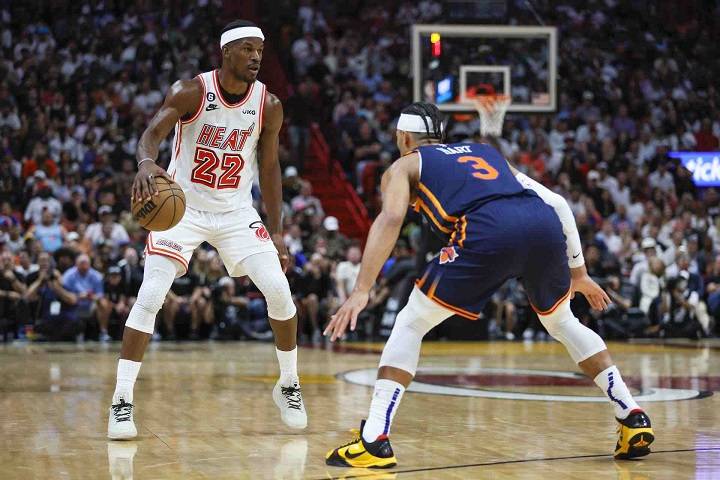
Basketball, a dynamic and strategic sport, unfolds on the court with each player assuming a specific role that contributes to the team’s overall performance. Among the diverse positions on the basketball court, the post positions stand out as pillars of strength, skill, and strategic prowess. In this comprehensive exploration, we delve into the intricacies of post positions, uncovering the names, responsibilities, and unique attributes that define these players and their vital role in the game.
Understanding Basketball Positions
The Five Positions:
Point Guard (PG):

Traditionally the playmaker, responsible for ball handling, distribution, and facilitating offensive plays.
Shooting Guard (SG):
Adept at scoring, often specializing in long-range shooting and driving to the basket.
Small Forward (SF):
Versatile players who contribute both offensively and defensively, often bridging the gap between guards and forwards.
Power Forward (PF):
Combining strength with agility, power forwards excel in rebounding, scoring in the post, and mid-range shooting.
Center (C):
The anchor of the team, centers dominate the post, protect the rim, and contribute to rebounding.
Frontcourt and Backcourt:
Frontcourt:
Comprising power forwards and centers, the frontcourt players operate closer to the opponent’s basket, emphasizing post play.
Backcourt:
Point guards, shooting guards, and small forwards make up the backcourt, focusing on perimeter play and ball movement.
Unraveling the Post Positions
Power Forward (PF):
Role and Responsibilities:

Power forwards, often referred to as the “4” position, play a pivotal role in both scoring and defense. They are versatile players who can score from the post, mid-range, and occasionally beyond the arc.
Offensive Presence:
Power forwards excel in post moves, utilizing their strength to score close to the basket. They are proficient in pick-and-roll situations and contribute to offensive rebounding.
Defensive Contributions:
On the defensive end, power forwards use their athleticism to guard opponents in the post and contest shots. They are crucial in securing defensive rebounds.
Center (C):
Role and Responsibilities:
Centers, occupying the “5” position, are often the tallest players on the team. Their primary responsibilities include protecting the rim, rebounding, and scoring in the post.
Low-Post Dominance:
Centers are known for their low-post moves, utilizing hooks, drop steps, and dunks to score efficiently. They serve as a defensive anchor, blocking shots and altering opponents’ attempts.
Rebounding Prowess:
Rebounding, both offensively and defensively, is a key strength of centers. Their height and positioning make them formidable forces on the boards.
Naming Conventions:
Traditional Naming:
The names “power forward” and “center” reflect the traditional positioning on the court. However, the game’s evolution has led to more fluid roles, blurring strict positional boundaries.
Stretch Four and Small-Ball Centers:
Modern basketball introduces variations like the “stretch four,” a power forward with three-point shooting ability, and “small-ball centers” who are more mobile and versatile.
Signature Moves and Playing Styles
Power Forward Excellence:
Dirk Nowitzki’s Fadeaway:
Legendary power forwards like Dirk Nowitzki are celebrated for signature moves, such as the one-legged fadeaway, showcasing finesse and skill.
Blake Griffin’s Athleticism:
Players like Blake Griffin redefine the power forward position with athleticism, incorporating high-flying dunks and explosive drives to the basket.
Dominant Centers:
Hakeem Olajuwon’s Dream Shake:
Hakeem Olajuwon, one of the greatest centers, popularized the “Dream Shake,” a series of deceptive moves in the post.
Shaquille O’Neal’s Physicality:
Known for his sheer physical dominance, Shaquille O’Neal overwhelmed opponents with powerful dunks and a commanding presence in the paint.
Evolution of Post Play
Skill Versatility:
Stretch Bigs:
Modern power forwards and centers are often “stretch bigs” with the ability to shoot from long range, stretching the defense and creating new challenges for opponents.
Playmaking Centers:
Centers are evolving into playmakers, showcasing passing skills and facilitating ball movement from the post.
Defensive Adaptations:
Switching Defenses:
Teams increasingly implement switching defenses, allowing power forwards and centers to guard multiple positions on the court.
Rim Protection:
Shot-blocking and rim protection remain integral to the defensive roles of power forwards and centers.
Challenges and Adaptations
Pace and Space Era:
Faster Pace:
The “pace and space” era in basketball emphasizes a faster, more up-tempo style of play, challenging traditional post-oriented offenses.
Three-Point Emphasis:
Teams are placing greater emphasis on three-point shooting, impacting the offensive roles of power forwards and centers.
Defensive Challenges:
Versatile Opponents:
Facing more versatile opponents, power forwards and centers must adapt defensively, guarding players with three-point shooting ability and perimeter skills.
Small-Ball Lineups:
Teams frequently deploy small-ball lineups, featuring agile players who can spread the floor, challenging traditional post players.
Notable Post Players and Legacies
Tim Duncan: The Fundamental Power Forward
Fundamental Excellence:
Tim Duncan, widely regarded as one of the greatest power forwards, exemplified fundamental excellence with a reliable bank shot and strong post moves.
Leadership:
Duncan’s leadership and consistency contributed to the San Antonio Spurs’ sustained success.
Shaquille O’Neal: The Dominant Center
Physical Dominance:
Shaquille O’Neal’s physical dominance and powerful presence in the post made him a force to be reckoned with.
Championships and Legacy:
O’Neal’s impact transcended individual accomplishments, leading teams to multiple championships and leaving a lasting legacy.
Strategies for Post Players
Skill Development:
Expanding Offensive Repertoire:
Post players are encouraged to expand their offensive repertoire, incorporating mid-range and three-point shooting to keep defenses honest.
Ball Handling:
Developing ball-handling skills allows post players to contribute to playmaking and passing.
Defensive Versatility:
Switching and Help Defense:
Adapting to switching defenses and providing help defense against perimeter players are crucial for post players in modern basketball.
Mobility and Agility:
Enhancing mobility and agility enables post players to defend in a league where speed is increasingly valued.
Related Post:
The Symphony of Cricket: A Comprehensive Guide to Cricket Equipment Names
Unveiling the Tapestry of Golf: A Comprehensive Guide to Golf Club Names
Beyond the Boundary: Unraveling the Economics of Cricket Players’ Earnings
In the grand theater of basketball, the post positions stand as guardians of the paint, orchestrating the delicate balance between offense and defense. From the powerful dunks of dominant centers to the finesse of skilled power forwards, the post positions have witnessed an evolution that mirrors the ever-changing landscape of the sport.
As the game continues to evolve, post players adapt, showcasing versatility, skill expansion, and defensive acumen. The legacy of iconic players like Tim Duncan and Shaquille O’Neal reverberates through the courts, influencing the next generation of post players who navigate the challenges of a fast-paced, three-point-centric era.
In the symphony of basketball, the post positions play a distinctive tune—a blend of strength, skill, and strategic brilliance. So, whether it’s a power forward executing a perfectly timed post move or a center dominating the boards, the post positions continue to leave an indelible mark on the ever-evolving narrative of basketball.