

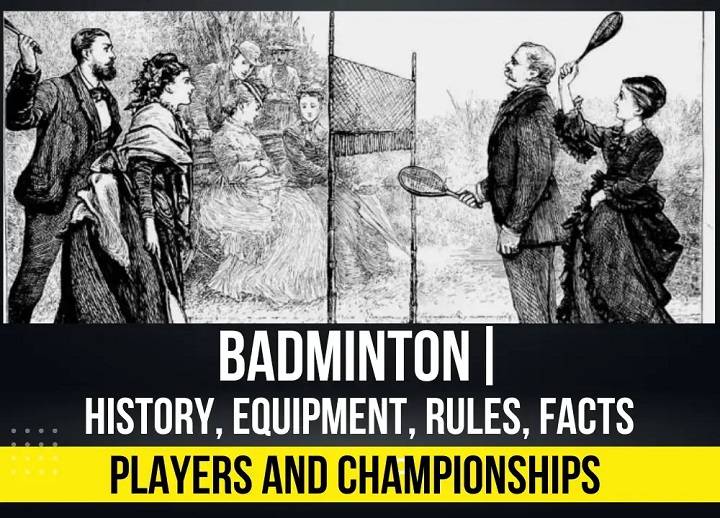
Badminton, a sport synonymous with agility, speed, and precision, has a rich and storied history that spans centuries. From its humble origins to becoming a global phenomenon, the evolution of badminton mirrors the dynamic interplay of culture, athleticism, and competitive spirit. In this extensive journey, we delve into the annals of badminton’s past, tracing its roots, exploring pivotal milestones, and illuminating the factors that have shaped the sport into what it is today.
Origins of Badminton: A Shuttlecock’s Sojourn
Early Beginnings: The Battledore and Shuttlecock Era
Ancient Roots:

The roots of badminton can be traced back over two thousand years to ancient civilizations. In ancient Greece, China, and India, a game called “battledore and shuttlecock” was played. This precursor to badminton involved hitting a shuttlecock back and forth with a simple paddle, known as a battledore.
European Influence:
The game gained popularity in Europe during the 17th century, with shuttlecocks made from feathers and cork, and the battledore evolving into a racket. The sport became a favorite pastime among the English elite, played in grand estates and gardens.
Poonah and the Birth of Badminton
Evolution in British India:
The evolution of badminton took a significant leap in the mid-19th century in British India. Army officers stationed in the town of Pune (then called Poonah) adapted the game, incorporating a net and formalizing the rules. This marked the transition from the informal battledore and shuttlecock to a structured, competitive sport.
The Duke of Beaufort’s Estate:
Badminton, as we know it today, owes its name to the Duke of Beaufort’s Badminton House in Gloucestershire, England. The sport gained further recognition when the Duke’s guests took an interest in the game, leading to its codification and spread across England.
Unfolding the Chapters: The Growth of Badminton
Formation of the Bath Badminton Club
Establishment of the First Club:

In 1873, the Bath Badminton Club was founded, formalizing the rules of the game and serving as a pivotal institution in the early development of badminton. The club’s regulations, known as the Bath Badminton Club Rules, laid the groundwork for the standardized rules of the sport.
International Recognition:
As the Bath Badminton Club Rules became widely adopted, badminton gained international recognition. The rules addressed crucial aspects such as court dimensions, scoring, and gameplay, fostering a sense of uniformity that contributed to the sport’s global expansion.
Spreading Wings: Badminton Across Continents
Asia’s Embrace:
Badminton found fertile ground in Asia, particularly in countries like China, Indonesia, and Malaysia. The sport resonated with the agility and precision ingrained in Asian cultures. China, in particular, emerged as a dominant force in badminton, showcasing unparalleled skill on the international stage.
Olympic Inclusion:
The ascent of badminton as a globally recognized sport culminated in its inclusion in the Olympic Games. Badminton made its debut as a demonstration sport in the 1972 Munich Olympics and later became a full-fledged Olympic event in the 1992 Barcelona Olympics. The Olympic platform elevated the sport’s profile, attracting a wider audience and fostering increased competitiveness.
The Anatomy of the Game: Badminton’s Core Elements
Court Dynamics and Equipment Evolution
Court Specifications:
Badminton’s court dimensions and layout are integral to the game’s dynamics. The rectangular court is divided by a net, with specific markings determining the boundaries for singles and doubles play. The court’s dimensions contribute to the fast-paced nature of the game.
Racket Revolution:
The evolution of badminton rackets has been marked by advancements in materials and design. Early rackets were crafted from wood, evolving into frames made of steel and aluminum. Modern rackets utilize materials like graphite and carbon fiber, offering a blend of strength, flexibility, and maneuverability.
The Shuttlecock: Feather vs. Nylon
Feathered Shuttlecocks:
Traditionally, shuttlecocks were crafted with feathers, often goose feathers, attached to a cork base. Feathered shuttlecocks are favored for their aerodynamic properties, providing a unique flight trajectory and demanding a high level of skill to control.
Nylon Shuttlecocks:
The advent of nylon shuttlecocks introduced a more durable and cost-effective alternative. Nylon shuttlecocks are widely used in recreational play and certain competitive settings. While they offer consistency in flight, they differ in dynamics compared to their feathered counterparts.
Rallying through the Decades: Badminton’s Evolution
The Rise of Power and Speed
Power Play:

Modern badminton is characterized by a dynamic interplay of power and speed. Players employ explosive footwork, swift reflexes, and powerful strokes to outmaneuver opponents. The emphasis on agility and quick reactions has redefined the strategic aspects of the game.
Notable Playing Styles:
Players have developed distinct playing styles, with some excelling in aggressive, attacking play, while others focus on defensive strategies. The diversity of playing styles adds a layer of unpredictability to the sport, keeping spectators on the edge of their seats.
Technology’s Impact on Performance
Advancements in Racket Technology:
Technological advancements have played a pivotal role in enhancing racket performance. Lightweight materials, innovative designs, and precision engineering contribute to rackets that offer a balance of power, control, and maneuverability.
Shuttlecock Innovation:
The ongoing quest for a shuttlecock that combines the best attributes of both feathered and nylon varieties has led to continuous innovation. Manufacturers strive to create shuttlecocks that deliver consistent flight patterns and durability while maintaining the nuances of traditional feathered shuttlecocks.
The Global Stage: Badminton’s Premier Tournaments
Thomas and Uber Cup: The Team Championships
Thomas Cup:
The Thomas Cup, established in 1948, is the premier international team competition for men in badminton. Named after Sir George Thomas, a former English badminton player, the tournament showcases national teams vying for supremacy.
Uber Cup:
The Uber Cup, introduced in 1956, is the female counterpart to the Thomas Cup. Named after Betty Uber, an English badminton player, the tournament features women’s national teams competing for the prestigious trophy.
All England Open: A Legacy of Excellence
Historic Origins:

The All England Open Badminton Championships, inaugurated in 1899, is one of the oldest and most prestigious badminton tournaments. It holds the distinction of being the only badminton event played in the 1900 Paris Olympics.
Global Significance:
The All England Open attracts top players from around the world, making it a benchmark of excellence in the sport. Its historic legacy and status as a Super 1000 event in the Badminton World Federation’s calendar underline its global significance.
Legends of the Shuttle: Iconic Badminton Players
Rudy Hartono: A Pioneer of Indonesian Dominance
Dominance in the 1960s:
Rudy Hartono, an Indonesian badminton player, left an indelible mark on the sport during the 1960s. He achieved unprecedented success, winning the prestigious All England title for eight consecutive years and establishing himself as a symbol of Indonesian dominance in badminton.
Lin Dan: The Super Dan Legacy
Two-Time Olympic Champion:
Lin Dan, a Chinese badminton legend, is widely regarded as one of the greatest players in the history of the sport. His achievements include two Olympic gold medals and five World Championship titles, solidifying his status as an icon in Chinese and global badminton.
Navigating Challenges: The Controversies and Reforms
Doping Scandals and Integrity Challenges
Doping Incidents:
Badminton, like many sports, has faced challenges related to doping. Doping scandals have cast shadows over the achievements of some players, prompting the governing bodies to implement stringent anti-doping measures to preserve the integrity of the sport.
Scoring System Changes and Format Adjustments
Rally Scoring System:
In an effort to enhance the spectator experience and increase the intensity of matches, badminton adopted the rally scoring system. This system awards a point for every rally, regardless of which side serves. The change aimed to make the sport more engaging and viewer-friendly.
Innovations in Tournament Formats:
Tournament organizers have explored innovative formats, including the introduction of new events and modifications to existing ones. These changes seek to maintain fan interest, enhance player participation, and adapt to the evolving landscape of international badminton.
Grassroots Growth: Badminton at the Community Level
School Programs and Grassroots Initiatives
Introduction in Schools:

Badminton’s accessibility and adaptability make it an ideal sport for introduction in school programs. Many countries have embraced badminton as part of physical education, exposing young individuals to the sport’s fundamentals and fostering a culture of active participation.
Community Clubs and Academies:
Community badminton clubs and academies play a crucial role in nurturing talent and providing a platform for enthusiasts of all ages. These grassroots initiatives contribute to the sport’s growth by creating pathways for aspiring players to develop their skills.
Looking to the Future: Badminton in the 21st Century
Technological Integration and Data Analytics
Player Performance Analysis:
Technological advancements have brought data analytics and performance tracking to the forefront of badminton. Players and coaches utilize technology to analyze matches, assess player performance, and strategize for future competitions.
Equipment Innovation:
The integration of technology extends to equipment innovation, with smart rackets and wearable devices offering insights into player movements, shot velocities, and physical exertion. These innovations contribute to refining training regimens and optimizing player performance.
Globalization and Cultural Exchange
Emerging Powerhouses:
Badminton’s global landscape has witnessed the emergence of new powerhouses, with countries like Japan, South Korea, and Denmark making significant strides in international competitions. The sport’s globalization has led to a more diverse and competitive field, enriching the cultural exchange within the badminton community.
Related Post:
Elevating the Game: Mastering Goaltending in Basketball
Exploring Countries with the Most World Cups
Perfect Views: Navigating the Best Seats at a Baseball Game
As we unravel the history of badminton, we witness a tapestry woven with the threads of tradition, innovation, triumphs, and challenges. From the ancient battledores of yesteryear to the lightning-fast rallies on the modern court, badminton’s journey epitomizes the enduring spirit of sportsmanship and competition.
In the 21st century, badminton stands at the crossroads of tradition and innovation, with players pushing the boundaries of physical prowess and technology reshaping the landscape of the game. Whether it’s the thwack of the shuttlecock, the swift footwork on the court, or the strategic brilliance of a well-executed rally, badminton continues to captivate hearts around the world.
So, whether you’re a seasoned player, a casual enthusiast, or a curious observer, let the shuttlecock guide you through the enchanting chapters of badminton’s history. As the sport evolves, its legacy endures, leaving an imprint on the collective memory of those who have marveled at the grace, skill, and sheer brilliance of the shuttle’s flight.