

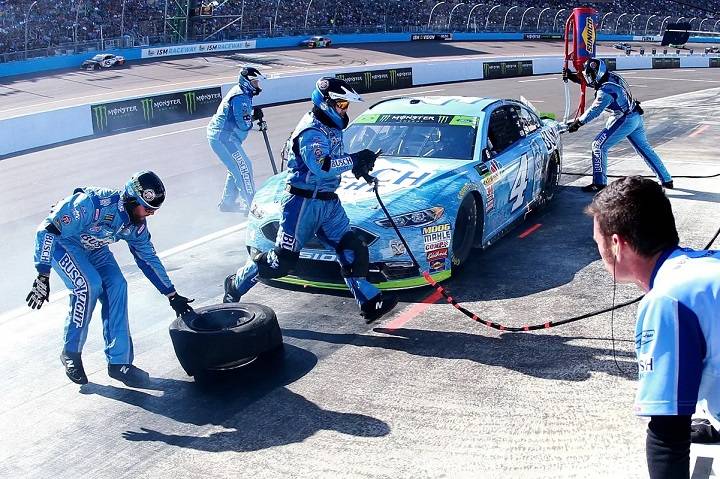
NASCAR, the adrenaline-fueled world of high-speed racing, relies not only on the prowess of drivers but also on the precision and efficiency of pit crews. These unsung heroes play a crucial role in the success of a race, executing lightning-fast pit stops that can make the difference between victory and defeat. In this comprehensive exploration, we delve into the world of NASCAR pit crew salaries, unraveling the factors that influence earnings, the skill sets that command top pay, and the evolving landscape of compensation in the pit lane.
Understanding the Dynamics: The Crucial Role of Pit Crews in NASCAR
The Pit Stop Ballet

NASCAR pit stops are a choreographed dance of speed and precision. In a matter of seconds, the pit crew changes tires, refuels the car, makes necessary adjustments, and sends the driver back onto the track. The seamless execution of these tasks requires a highly skilled and synchronized pit crew.
- “The Money Stop”: Decisive Moments
- Often referred to as “the money stop,” a well-executed pit stop can propel a driver from the middle of the pack to a leading position. These crucial moments in the pits underscore the significance of a skilled and efficient pit crew.
- “Over-the-Wall Crew”: The Pit Lane Specialists
- The pit crew, also known as the “over-the-wall crew,” is composed of specialists with specific roles, including tire changers, tire carriers, fuelers, and mechanics. Each member plays a vital part in the success of a pit stop.
The Need for Speed
In NASCAR, where races are won and lost by fractions of a second, speed is of the essence. Pit crews undergo rigorous training to shave precious moments off their pit stop times, ensuring that the driver spends minimal time in the pits and more time on the track.
- “Sub-12 Second Stops”: Record-Breaking Feats
- Pit crews aim for sub-12 second stops, and breaking the 12-second barrier is considered a significant achievement. These lightning-fast stops require precision, coordination, and a relentless commitment to speed.
- “Two-Tire Stops vs. Four-Tire Stops”: Strategic Considerations
- Pit strategy adds another layer of complexity. Teams must decide between two-tire stops for a quicker turnaround or four-tire stops for better performance on the track. This strategic decision-making influences pit crew dynamics and, consequently, their compensation.
Breaking Down NASCAR Pit Crew Salaries: Factors and Influences
Role Specialization

NASCAR pit crews are not one-size-fits-all; each member has a specialized role that demands a unique skill set. The level of expertise required for tasks such as tire changing, fueling, and mechanical adjustments influences individual salaries within the pit crew.
- “Tire Changers vs. Fuelers”: Specialized Skill Sets
- Tire changers and fuelers, for example, have distinct skill sets. The precision and speed needed to change a tire in seconds or fuel the car rapidly contribute to the value each specialist brings to the pit crew.
- “Crew Chief”: Leadership and Strategy
- The role of the crew chief is pivotal. This leader oversees the entire pit crew, making strategic decisions and ensuring seamless coordination during pit stops. The level of responsibility and leadership skills often translate into a higher salary for the crew chief.
Team Affiliation
The team a pit crew is affiliated with can significantly impact salaries. Top-tier teams with larger budgets may have the financial resources to offer higher salaries to their pit crews compared to smaller or independent teams.
- “Big Budget Teams vs. Independent Teams”: Varied Financial Capacities
- Pit crews working for NASCAR giants with substantial budgets may enjoy higher salaries, better benefits, and access to cutting-edge training facilities. Independent teams, while competitive, may face budget constraints that influence compensation structures.
- “Performance Incentives”: Rewards for Success
- Some pit crew contracts include performance incentives, providing additional compensation for successful races, podium finishes, or championships. These incentives motivate pit crews to consistently perform at their best.
Experience and Expertise
Just like drivers, pit crew members accumulate experience and expertise over their careers. Veterans with a proven track record of successful pit stops and strategic contributions often command higher salaries than newcomers.
- “Rookie Pit Crew Members”: Building a Reputation
- Rookie pit crew members may start with lower salaries as they build their reputation and gain experience in the highly competitive world of NASCAR. Successes on the pit lane contribute to their market value.
- “Pit Crew Coaches”: Elevating the Team
- Some seasoned pit crew members transition into coaching roles, where they train and mentor the next generation of over-the-wall specialists. Coaching roles may come with different compensation structures, reflecting the value of their guidance.
Navigating the Salary Landscape: Pit Crew Ranks and Earnings
Entry-Level Positions
Entry-level positions in a pit crew, such as the tire carrier or backup crew member, may have more modest salaries compared to their counterparts with specialized skills. These roles often serve as stepping stones for individuals looking to climb the ranks.
- “Tire Carriers”: Essential Support Role
- Tire carriers, responsible for transporting new tires to the car during a pit stop, play a crucial support role. While their salaries may be more entry-level, their contributions are integral to the team’s success.
- “Backup Crew Members”: Readiness for Action
- Backup crew members, who stand ready in case of injury or other unforeseen circumstances, provide a safety net for the team. Their salaries reflect their preparedness to step into action when needed.
Specialized Positions
Specialized positions within the pit crew, such as tire changers and fuelers, command higher salaries due to the unique skills and speed required for their tasks. These roles often represent the heart of the pit crew’s efficiency.
- “Tire Changers”: Lightning-Fast Precision
- Tire changers, responsible for replacing old tires with fresh ones in seconds, require lightning-fast precision. Their salaries reflect the specialized nature of their role and the impact they have on the race.
- “Fuelers”: Rapid Refueling Expertise
- Fuelers, tasked with efficiently refueling the car during a pit stop, possess expertise in rapid refueling techniques. Their ability to execute this task quickly influences their salaries within the pit crew hierarchy.
Leadership Positions
Leadership positions, notably the crew chief, represent the pinnacle of the pit crew hierarchy. These individuals oversee the entire pit crew, making strategic decisions and coordinating the split-second actions of each member.
- “Crew Chief”: Strategic Maestro
- The crew chief’s salary reflects their role as the strategic maestro of the pit crew. Their leadership, decision-making, and ability to coordinate complex pit stops contribute to their elevated compensation.
- “Assistant Crew Chief”: Supporting Leadership
- Some pit crews may have an assistant crew chief who supports the crew chief in their responsibilities. The assistant crew chief’s salary aligns with their leadership role and contributions to the team’s success.
The Evolving Landscape: Trends in NASCAR Pit Crew Salaries
Professionalization and Specialization
As NASCAR pit stops become more professionalized, there is a trend toward specialization. Pit crews are increasingly composed of individuals with specific expertise, contributing to a more specialized and efficient pit lane.
- “Pit Crew Training Facilities”: Sharpening Skills
- Top NASCAR teams invest in state-of-the-art training facilities where pit crews hone their skills. These facilities contribute to the professionalization of pit crews and may be reflected in enhanced salary structures.
- “Cross-Sport Recruitment”: Borrowing Skills
- NASCAR teams sometimes recruit individuals with backgrounds in other sports, such as football or track and field, who bring unique skills that can be applied to pit crew roles. This cross-sport recruitment may influence salary dynamics.
Technology and Performance Metrics
Advancements in technology play a role in shaping the modern pit crew landscape. Teams use performance metrics and data analytics to optimize pit stop strategies, influencing how pit crews are compensated.
- “Data-Driven Performance Metrics”: Maximizing Efficiency
- Data-driven performance metrics allow teams to analyze the efficiency of pit stops. Pit crews that consistently meet or exceed performance benchmarks may be rewarded with higher salaries or performance-based bonuses.
- “Real-Time Feedback”: Instant Adjustments
- Real-time feedback during pit stops enables crews to make instant adjustments. The ability to adapt to changing race conditions and execute flawless stops is a valuable skill that may be reflected in compensation.
Challenges and Considerations: Pit Crew Life Beyond the Pit Lane
Physical Demands and Injury Risks
The life of a pit crew member is physically demanding, with rapid movements, heavy equipment, and the risk of injury during high-pressure pit stops. Salaries often take into account the demanding nature of the job and the potential for physical strain.
- “Recovery and Rehabilitation”: Supporting Crew Members
- In the event of injuries, pit crews may have access to recovery and rehabilitation support. Teams recognize the importance of maintaining the physical well-being of their crew members to ensure long-term performance.
Travel and Time Commitment
NASCAR’s extensive race schedule involves travel to various locations, with pit crews spending weekends away from home. Salaries consider the time commitment and the challenges associated with the nomadic nature of the NASCAR season.
- “Home Base Facilities”: Creating a Supportive Environment
- Teams invest in home base facilities that provide a supportive environment for pit crew members. These facilities serve as a hub for training, recovery, and camaraderie, contributing to the overall well-being of the crew.
Negotiating the Fast Lane: Contract Negotiations and Compensation Packages
Contract Length and Renewals
Contracts for pit crew members vary in length, with factors such as experience, performance, and team dynamics influencing negotiations. Successful pit crew members may negotiate multi-year contracts that offer stability and financial security.
- “Free Agency in Pit Crews”: Exploring Opportunities
- Pit crew members may explore free agency, considering offers from different teams. Successful negotiations often hinge on a combination of performance, experience, and the unique skills each individual brings to the table.
Endorsements and Sponsorships
Successful pit crew members may attract endorsements and sponsorships, adding additional streams of income beyond their base salaries. These opportunities may arise based on individual achievements, team success, or personal branding.
- “Pit Crew Visibility”: Leveraging Success
- Visibility in the media, especially during televised races, can enhance the marketability of pit crew members. Successful pit crews become recognizable figures, and endorsements may follow as a result.
Related Post:
A Comprehensive Exploration of the History of Badminton
Mastering the Art: Unveiling the Intricacies of Gymnastics Moves
How Many Minutes Is Ice Hockey Played?
In the fast-paced world of NASCAR, pit crews are the unsung heroes working behind the scenes to propel drivers to victory. The intricacies of NASCAR pit crew salaries reflect the specialized skills, leadership roles, and evolving dynamics within the sport. As the landscape continues to shift with advancements in technology, increased professionalization, and a focus on performance metrics, pit crews find themselves at the forefront of innovation in motorsports.
Navigating the salary landscape in the pit lane involves considerations beyond the financial aspect, including the physical demands of the job, the nomadic nature of the racing season, and the potential for endorsements. Pit crew members, whether tire changers, fuelers, or crew chiefs, contribute to the thrilling spectacle of NASCAR, embodying the spirit of teamwork and precision that defines the sport.
As the NASCAR season unfolds with its twists and turns, pit crews remain at the heart of the action, demonstrating their commitment to excellence in every lightning-fast pit stop. So, whether you’re a seasoned fan cheering from the stands or a newcomer captivated by the speed of the racetrack, take a moment to appreciate the dedicated pit crews, whose skills and efficiency keep the wheels turning and the races thrilling.