


Spikeball is a fun and competitive game that is super easy to learn and is great for all different ages and skill levels. One of the unique things about Spikeball is the net and rim and how they impact different rules and overall play.
While watching a game of Spikeball you may hear the term pocket being used. The pocket can play a big role throughout the game and it’s important to understand what it is and what the associated rules are.
A pocket in Spikeball is when the ball contacts the net and changes trajectory due to proximity to the rim (without contacting the rim). During a serve if the ball hits the pocket it is considered a fault. With the exception being a near net, where the ball hits near the server’s side of the net. This is not considered a fault. If a pocket is hit during regular play it is not considered a fault and the rally will continue.
In this article, we will discuss in more detail what a pocket is in Spikeball, key rules and tips as well as everything you need to know about this important part of Spikeball.
Let’s get started.
A Spikeball Pocket
A pocket in Spikeball can sometimes be a gray area and its important to know what the official rules are, so you can make sure you are playing the game correctly. This is especially true if you are wanting to participate in tournaments and more competitive play.
The serve is where the pocket really matters. If a side or back pocket is hit during the serve causing the ball to change trajectory it is considered a fault. However, if a serve hits the front pocket it’s considered a legal serve.
Here is what the official Spikeball rules say regarding the pocket and the serve:
It is considered a serving fault when the ball’s trajectory changes due to proximity to the rim, without contacting the rim (i.e. pocket). Exception: If the ball hits near the server’s side of the net, commonly called a near net, it typically bounces low and hard without a change in direction. This is a legal serve. (source: Official Spikeball Rules)
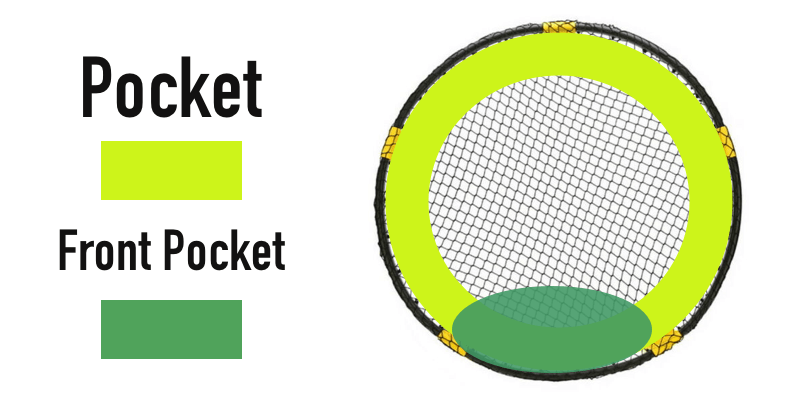
It’s also important to note that a pocket is only considered to be a fault during the serve. If a player hits a pocket which causes the ball to change trajectory due to being close to the net it is a legal play and the rally would continue. As long as the ball hit the net cleanly and didn’t touch the rim.
What Happens When You Hit a Pocket?
When a player hits a side or back pocket on a serve its officially ruled as a fault and the player will re-serve (if that was their 1st serve). If the serve hits the front pocket this is considered a legal hit and play will continue.
On the other hand, if a player hits a front, side, or back pocket during normal play this is a legal hit and the rally will continue until a team scores a point.
How Do You Know if You Hit the Pocket?
At times it might be difficult know whether a ball has hit a pocket on a serve or not. The official rules state the ball must come cleanly off the net on a serve. If the ball takes an unpredictable bounce the receiving team must call a pocket before the ball is returned. (Source: Anderson University)
In most cases pockets will be fairly obvious to see, making the call easy for all players and officials. However, there may be times where its more in a gray area and there might be some disagreements whether the ball hit a pocket or not. The best thing to do in these types of situations is to replay the serve or point.
Another gray area that you might run into during a Spikeball game is whether or not a serve or return hit the net cleanly or if it hit part of the rim.
Pocket vs. Rim
If the ball hits the rim at any time, it is a fault and the other team would score a point. When you are in the heat of a rally it might be hard to tell if a ball hit the rim or a pocket, because both will cause the ball to bounce unpredictably.
The main distinction between the ball hitting the pocket or the rim is the sound. On most plays when the ball hits the rim, you’ll hear a thump indicating a rim was hit instead of the net.
If there are any disagreements, you can replay the serve or point. See Spikeball website for additional information and details.

Who Calls a Pocket?
During the game it can sometimes be hard to tell whether the ball has hit the pocket. These types of calls are made at the discretion of the receiving team.
If the receiving team calls a pocket before their second hit, it’s considered a fault and the opposing team will re-serve. If they decide to return the serve it’s a live ball and they rally will continue. This rule also applies to serves that hit the rim.
Spikeball Roll-Up
Another term that every Spikeball player needs to be familiar with is what is considered a roll-up. A roll-up in Spikeball is when the ball lands cleanly on the net and rolls into the rim and up. A roll-up is treated the same way a pocket would be.
Meaning it’s a legal play during a regular rally, but it’s considered a fault when it occurs during a serve. If a roll-up occurs during the first serve the serving team can serve the ball again.
Related Spikeball Questions
Are Pockets Legal in Spikeball? A pocket is a legal hit in Spikeball during normal play. However, if a player hits a pocket during their serve it is a fault and the player will re-serve or give up a point if it’s their second serve.
The only exception is to this rule is if the serve hits the front pocket. The front pocket is a legal hit on a serve. This is actually a great serving strategy and can make it difficult for the opposing team to return.
Is Pocket a Redo in Spikeball? If the ball hits the pocket during a rally, normal play will continue until a team scores a point. If a player makes a fault by hitting the pocket during their first serve, they will get a second serve.
Final Thoughts
Understanding what a pocket is and when its okay to hit is foundational knowledge that every Spikeball player should understand regardless of their skill level.
I hope this article has helped you better understand what the pocket is and how it impacts the overall game of Spikeball. Now get out there and go enjoy this game with some friends.