

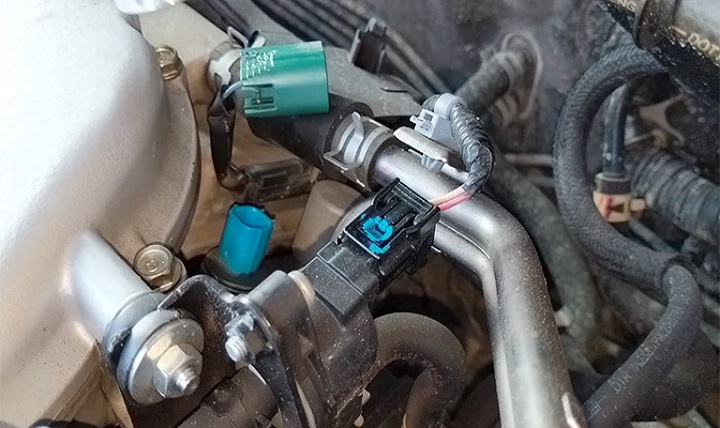
When your check engine light flashes and a scan reveals the P3400 code, it indicates a fault in the cylinder deactivation system, specifically affecting Bank 1 of your engine. Found mostly in Honda, Acura, and GM vehicles with Variable Cylinder Management (VCM) or Active Fuel Management (AFM), this code typically signals that the engine is having trouble switching between full-cylinder and reduced-cylinder operation.
In this guide, we’ll explore what P3400 means, its causes, symptoms, diagnostic tips, and how to fix it. If you’re driving a V6 or V8 with fuel-saving tech, this one’s for you.
What Does P3400 Code Mean?

P3400 – Cylinder Deactivation System Bank 1
This code is set when the Powertrain Control Module (PCM) detects a malfunction in the deactivation of the engine cylinders on Bank 1 (the side of the engine that includes cylinder #1). These systems are designed to improve fuel economy by shutting off cylinders during light load conditions, such as highway cruising.
In affected engines, the system uses a combination of oil pressure, solenoids, and special valve mechanisms to enable or disable selected cylinders.
When this process fails to engage or disengage properly, the PCM triggers code P3400.
Common Causes of P3400
There are several reasons why a P3400 code might appear. Some are mechanical, while others relate to sensors or oil pressure systems.
| Cause | Description |
| Low or Dirty Engine Oil | Insufficient oil pressure can prevent the VCM/AFM system from functioning |
| Faulty VCM/AFM Solenoid | The deactivation solenoid may be stuck or not responding properly |
| Clogged Oil Passages | Dirty oil or lack of maintenance may block the system’s hydraulic function |
| Malfunctioning Oil Pressure Sensor | Incorrect readings can confuse the PCM |
| Faulty PCM or Electrical Connections | Poor wiring or a defective module may misinterpret sensor input |
| Worn Timing Components | On high-mileage engines, wear can impact valve timing and solenoid operation |
Symptoms of a P3400 Code
You might not notice anything at first, but over time—or in certain conditions—you may experience noticeable performance changes or alerts.
Typical symptoms include
Check engine light on (immediate)
Engine runs rough or vibrates (especially at idle or highway speeds)
Reduced fuel efficiency
Poor acceleration
Vehicle enters limp mode in severe cases
Misfire codes (e.g., P0301-P0304) may accompany P3400
Since this code affects engine breathing and power delivery, symptoms can vary depending on how many cylinders are active.
Affected Vehicles and Engines
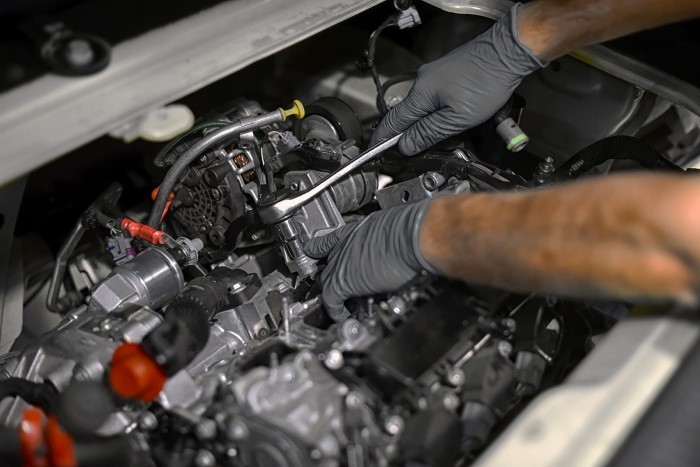
P3400 commonly affects vehicles using Honda’s VCM system and GM’s AFM technology. These engines deactivate cylinders under light load to save fuel.
Vehicles Known for P3400 Issues
Honda Pilot (2005–2017)
Honda Odyssey (2005–2017)
Honda Accord V6 (2008–2012)
Acura MDX/RLX/RL (2005–2016)
Chevrolet Silverado (AFM V8 engines)
GMC Sierra and Yukon
Chevrolet Suburban and Tahoe (AFM V8)
These systems rely on precise oil pressure control, so maintenance is crucial.
Diagnosing the P3400 Code
Proper diagnosis requires inspecting both mechanical and electrical components. Here’s how to approach it:
- Check Oil Level and Quality
Dirty or low oil is the #1 cause of VCM/AFM malfunctions. Top off or replace as needed.
- Scan for Related Codes
Check for P0522, P3497, or misfire codes (P030x). These may provide additional context.
- Inspect VCM/AFM Solenoid
Test for resistance and voltage at the solenoid. Replace if it shows abnormal readings.
- Inspect the Oil Pressure Sensor
Confirm that oil pressure readings are accurate with a mechanical gauge if needed.
- Check Electrical Wiring and Connectors
Look for corrosion, frayed wires, or loose connections near the solenoid and PCM.
- Check Timing Chain (if applicable)
Worn chains or tensioners can affect timing and confuse the deactivation system.
How to Fix Code P3400
Depending on the cause, the solution may be quick and inexpensive—or involve more in-depth work.
Most Common Fixes
Change engine oil and use correct viscosity
Replace VCM/AFM solenoid (Bank 1 side)
Replace oil pressure sensor
Clean clogged oil passages (engine flush if necessary)
Repair or replace damaged wiring
Reprogram or replace PCM (rare)
Estimated Repair Costs
Oil and filter change: $50–$100
Solenoid replacement: $150–$400
Oil pressure sensor: $100–$200
Wiring repair: $80–$250
PCM reflash or replacement: $250–$800 (only if confirmed)
Can You Drive with Code P3400?
Yes, in most cases the vehicle will still run, but driving with a P3400 code can lead to engine inefficiency or long-term wear. If ignored, it can cause carbon buildup, misfires, or even internal engine damage in rare cases.
Get it checked soon, especially if you notice rough running or poor fuel economy.
Preventing P3400 in the Future
Because oil pressure is so important to the VCM/AFM system, maintenance is the key to prevention.
Use high-quality oil and change it on time
Always use the recommended oil viscosity
Avoid short trips that prevent proper oil circulation
Keep an eye on the oil pressure gauge or warning lights
Use OEM or high-quality solenoids and filters if replacing parts
Regular oil changes are the single most effective way to prevent P3400 and related cylinder deactivation problems.
FAQs
What does Bank 1 mean in P3400?
Bank 1 refers to the side of the engine that contains cylinder 1. This is the side affected by the solenoid malfunction.
Can dirty oil cause P3400?
Yes. Dirty or low oil can block oil passages and reduce pressure, disabling the cylinder deactivation system.
Will a simple oil change fix P3400?
Sometimes, yes. If the issue is oil-related, a fresh oil and filter change using the correct viscosity can resolve the problem.
What happens if I ignore the P3400 code?
You may experience reduced fuel economy, rough running, or long-term engine wear if the system remains disabled.
Is P3400 a serious code?
It’s not an immediate emergency, but it should be diagnosed and fixed soon to avoid performance or efficiency loss.
Code P3400 is a common but manageable issue on VCM or AFM-equipped engines. In many cases, it’s caused by oil-related problems or a worn solenoid. With the right diagnostic steps, it’s usually easy to pinpoint the issue and get your engine running efficiently again.
Whether you’re driving a Honda, Acura, or GM truck, don’t ignore this code. A simple oil change today could prevent expensive repairs tomorrow.