

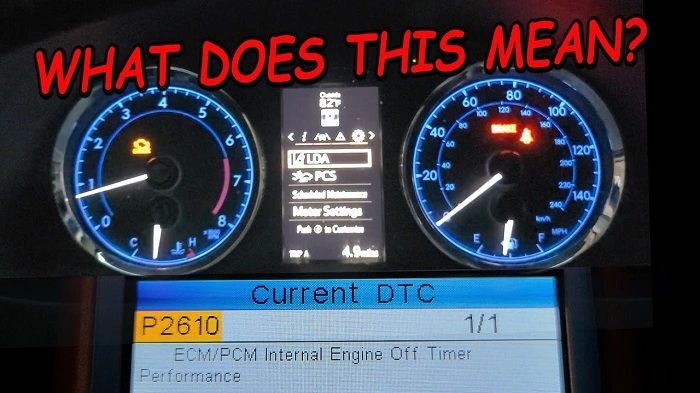
Getting a P2610 trouble code? This one points to an issue with the engine control module’s (ECM) internal timer. It’s not the most common code, but it can pop up on various makes—Toyota, Ford, Honda, GM, and others. Here’s what it means, what triggers it, and how to deal with it.
What Is Code P2610?
A Quick Overview
Definition: ECM/PCM Internal Engine Off Timer Performance
System Affected: Powertrain Control Module (PCM) or Engine Control Module (ECM)
What It Means: The vehicle’s computer isn’t properly keeping track of how long the engine has been off
Severity: Low to moderate—usually doesn’t affect driveability but should be addressed
What Triggers the P2610 Code?
- Faulty ECM/PCM
- Battery or voltage issues (low voltage, weak battery, etc.)
- Wiring problems—shorts, corrosion, poor grounds
- Software glitch or corrupted memory
- Aftermarket performance tunes or ECM replacements
This code often appears alongside others, especially if there are related electrical or memory issues.
Symptoms of a P2610 Code
- Check Engine Light (CEL) on
- Possible rough starting
- Intermittent stalling or strange idle behavior
- Delayed readiness monitors (won’t clear for emissions testing)
- In many cases: no noticeable symptoms at all
How to Diagnose P2610
- Scan for Codes: Check for P2610 plus any other related codes
- Inspect Battery/Voltage: Weak or unstable voltage is a common trigger
- Look for Wiring Issues: Especially around the ECM—frayed wires or corroded grounds
- Check for Recent ECM Flash or Replacement: Some P2610 codes follow software updates or ECM swaps
- Perform a Hard Reset: Clear the codes, reset the ECM, and monitor for return
How to Fix Code P2610
Common Fixes
- Replace a weak or failing battery
- Clean and secure ECM/PCM grounds
- Re-flash the ECM with updated software
- Repair damaged wiring to/from the ECM
- In rare cases: replace the ECM/PCM
Cost to Repair
- Battery Replacement: $100–$250
- Wiring Repair: $50–$300 depending on severity
- ECM Reflash: $100–$200 at most shops
- ECM Replacement: $500–$1,200 including labor (rare)
Can You Drive With a P2610 Code?
Yes, in most cases. It doesn’t usually cause performance issues or engine damage. But if your car is acting up or you need to pass emissions, get it fixed.
FAQs
Is P2610 a serious code?
Not usually. It rarely causes immediate drivability issues, but it can prevent readiness monitors from resetting—so it’s a problem if you need to pass inspection.
Can a bad battery cause a P2610 code?
Yes. Weak voltage or erratic power flow can interfere with the ECM’s memory function, triggering this code.
Will clearing the code fix the issue?
Sometimes. A hard reset might work if the issue was a voltage glitch or temporary software hiccup. But if the code comes back, there’s likely a deeper issue.
Does P2610 mean I need a new ECM?
Not necessarily. ECM failure is rare. Start by checking battery health, grounds, and software status first.
Can P2610 cause other codes to show up?
Yes. It can cause readiness monitors to fail or delay, and in some cases, it appears alongside misfire, idle control, or voltage-related codes.
Code P2610 usually points to a minor glitch in your vehicle’s ECM timer, often tied to power supply or memory issues. While it won’t leave you stranded, it can prevent emissions readiness and point to early electrical problems. Before replacing anything major, check your battery, connections, and recent software changes. With the right fix, this code usually doesn’t come back.