

Seeing a P1000 code on your Ford vehicle can be confusing—especially since it doesn’t behave like other trouble codes. Unlike check engine light triggers for misfires or oxygen sensor failures, P1000 simply indicates that the onboard diagnostic system hasn’t completed its checks yet. It’s not a problem in itself, but it does point to an incomplete drive cycle or recent reset. Here’s everything you need to know about the Ford P1000 code, what causes it, and how to clear it properly.
Why Pay Attention to the P1000 Code?
A Quick Snapshot
What It Is: OBD-II code specific to Ford vehicles: “OBD-II Monitor Testing Not Complete”
What’s New: Common on freshly serviced or recently reset vehicles
Known Issues (So Far): Rarely indicates an actual mechanical fault
Models Affected: Most Ford, Lincoln, and Mercury vehicles with OBD-II systems
DIY Friendly? Yes—fixing it doesn’t usually require professional help
P1000 Ford Code Explained
What Does the P1000 Code Mean?
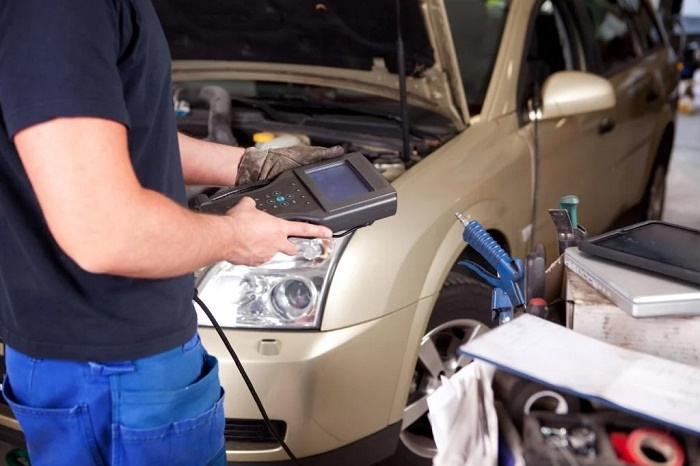
The P1000 code shows up when the OBD-II system hasn’t finished running its full set of self-tests after a reset. It doesn’t indicate a faulty part—it simply means the system hasn’t yet verified all emissions and performance systems.
Pros: Doesn’t require expensive parts or labor
Cons: Prevents emissions test or inspection pass until resolved
When Does P1000 Typically Appear?
- After disconnecting the battery
- After clearing codes with a scanner
- Following ECU replacement or update
- After major engine service or sensor replacement
Pros: Helps ensure drive cycle is completed before passing emissions
Cons: May confuse DIYers into thinking there’s a fault
Drive Cycle Requirement
To clear the P1000 code, your vehicle must complete a drive cycle—a specific set of operations that test all major systems.
Typical drive cycle steps include:
- Cold start
- Acceleration
- Highway cruise
- Deceleration
- Idle
Pros: Confirms everything’s working correctly
Cons: Takes time and specific driving conditions
Common Causes of the P1000 Code
Battery Disconnect or Power Loss
Any interruption to battery power resets the OBD-II monitors.
Fix: Simply drive the vehicle for a few days under varied conditions to complete the drive cycle
Code Cleared with Scan Tool
If a mechanic or driver clears trouble codes manually, this wipes the monitor history.
Fix: No repairs needed—just drive normally and allow the system to retest
Incomplete or Failed Emissions Tests
If the system detects inconsistent data or cannot finish tests due to short trips or specific conditions, the P1000 stays active.
Fix: Avoid frequent short trips; complete the full drive cycle
Recent ECU or Sensor Replacement
Reprogramming or installing new components will reset the system’s readiness.
Fix: Drive at mixed speeds, allow the engine to fully warm up, and avoid stalling
How to Complete a Ford Drive Cycle (To Clear P1000)
Step-by-Step Drive Cycle Example (Varies slightly by model):
- Start with a cold engine
- Idle for 2 minutes
- Accelerate to 55 mph at half throttle
- Cruise at 55 mph for 3 minutes
- Coast down to 20 mph without braking
- Accelerate again to 60 mph and hold for 5 minutes
- Stop and idle for 2 minutes
Note: A full tank of gas is not required, but fuel should be between 15%–85% for tests to run
Pros: Can be done without tools
Cons: May take multiple cycles if steps aren’t followed precisely
Maintenance and Diagnostic Outlook
Routine Checks
- Battery terminals: Ensure tight, clean connections
- Fuses: Confirm no blown fuses affecting the ECU
- OBD port access: Keep it clean and undamaged for accurate scans
- Scan Tools: A basic OBD-II scanner helps confirm when monitors are complete
Long-Term Impact
P1000 is not harmful, but if other codes are stored, they won’t clear inspection until P1000 is resolved. Always verify no hidden issues are delaying monitor completion.
Pros and Cons of P1000 in Ford Vehicles
Pros:
✔ Not a critical fault—no immediate repair needed
✔ Easy to resolve by driving normally
✔ Confirms whether full system tests are complete
Cons:
✘ Prevents passing emissions/inspection until cleared
✘ Can mask deeper issues if drivers ignore other codes
✘ Misunderstood as a serious error by many owners
FAQs
Is the P1000 code bad?
No. It’s just an indicator that the vehicle hasn’t completed a full diagnostic check since the last reset. It’s not a malfunction.
Can I pass inspection with a P1000 code?
Usually not. Most emissions testing centers require all monitors to be complete. You’ll need to drive more before it clears.
How long does it take to clear the P1000 code?
Typically 50–100 miles of mixed driving over a few days is enough. Following a full drive cycle helps speed up the process.
Does P1000 mean there’s a problem with my car?
No. It usually appears after battery disconnection or code reset. There’s no actual issue with components.
Will clearing other codes reset the P1000 code?
Yes. Any clearing of codes restarts the monitoring process, and P1000 will reappear until all tests complete again.
The P1000 code in Ford vehicles is more of a status message than a warning. It signals that your car’s onboard diagnostic system is still checking itself after a reset or service. There’s nothing broken, but you can’t ignore it either—especially if you’re due for an emissions test. Just follow the proper drive cycle and give it time. Once the monitors complete, the code clears on its own.