

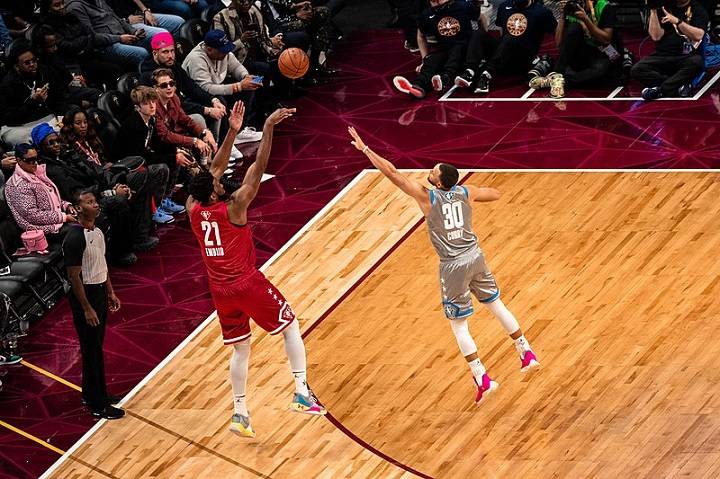
Basketball, often hailed as a fast-paced and dynamic sport, unfolds on hardwood courts where athleticism, teamwork, and strategic prowess converge. Within the context of this electrifying game, the concept of field goals takes center stage. In this comprehensive exploration, we delve into the intricacies of what constitutes a field goal in basketball, examining the factors that shape successful shots and the benchmarks that define excellence on the court.
Understanding Field Goals
The Basics: Two-Pointers and Three-Pointers
Two-Pointers: A two-point field goal is scored when a player successfully makes a basket from anywhere on t

he court inside the three-point line. The distance covered or the specific location of the shot doesn’t affect the point value; any successful shot within this region earns the team two points.
Three-Pointers: In contrast, a three-point field goal is achieved when a player makes a basket from beyond the three-point line. Shots from this distance are rewarded with three points. The ability to consistently convert three-pointers is often a hallmark of sharpshooters and can significantly impact the flow and outcome of a game.
Free Throws: The Art of Uncontested Points
Free Throws: While not categorized as field goals in the traditional sense, free throws are crucial to understanding a team’s overall scoring capacity. Players earn free throws after certain fouls, and each successful free throw adds one point to the team’s score. Free throws provide an opportunity for uncontested points, making them a vital aspect of offensive strategy.
Field Goal Percentage: Field goal percentage is a metric that assesses a player’s efficiency in converting field goals. It is calculated by dividing the total number of successful field goals by the total attempts and multiplying the result by 100. A high field goal percentage indicates an effective scorer, while a lower percentage may suggest room for improvement in shot selection or accuracy.
Dunking: A Spectacular Two-Point Affair
Dunking: Dunking, a visually captivating maneuver, involves a player scoring by directly stuffing the basketball through the hoop. While it’s categorized as a two-point field goal, the sheer athleticism and spectacle of a dunk often elevate its impact on the game. Dunking not only adds points to the scoreboard but can also serve as a momentum-shifting play that energizes both players and fans.
Benchmarking Successful Field Goal Performance
Field Goal Efficiency: Striving for High Percentages

Individual Efficiency: For individual players, field goal efficiency is a key indicator of scoring prowess. A player with a high field goal percentage demonstrates the ability to convert scoring opportunities consistently. Coaches and analysts often evaluate a player’s shooting efficiency to determine their offensive impact on the team.
Team Efficiency: On a team level, field goal efficiency reflects the collective scoring ability. Teams that work cohesively to create high-percentage shot opportunities and capitalize on them tend to have superior field goal percentages. Team efficiency is a critical factor in achieving success in basketball leagues and tournaments.
Clutch Shots: Rising to the Occasion
Clutch Performance: In basketball, the term “clutch” refers to players who excel in high-pressure situations, especially during crucial moments in a game. Making field goals when it matters most, such as in the closing minutes of a tight contest, is a testament to a player’s mental fortitude and skill under pressure.
Game-Winning Shots: Field goals that secure victory in the final moments of a game are iconic and etch a player’s name in the annals of basketball history. The ability to take and make game-winning shots adds a layer of legacy to a player’s career, with such moments often becoming defining highlights.
Factors Influencing Field Goal Success
Shot Selection: Balancing Risk and Reward
Quality Shots: Effective field goal shooting starts with intelligent shot selection. Players must assess the defense, their own shooting capabilities, and the game situation to take high-percentage shots. Open looks, well-executed plays, and shot selection based on a player’s strengths contribute to successful field goal attempts.
Contested Shots: Navigating through tight defense to make contested shots requires a combination of skill and creativity. Players who can convert contested field goals consistently add an element of unpredictability to their offensive repertoire, making them challenging for opponents to defend.
Offensive Strategies: Creating Scoring Opportunities
Offensive Plays: Coaches design offensive plays to create scoring opportunities for their players. These plays involve coordinated movements, screens, and passing sequences to generate open looks. Players who execute offensive plays effectively contribute to their team’s overall field goal success.
Fast Breaks: The fast break, a rapid offensive transition from defense to offense, often results in high-percentage scoring opportunities. Players who capitalize on fast breaks showcase speed, decision-making, and finishing ability, contributing to both individual and team field goal success.
Defensive Pressure: Affecting Shooting Accuracy
Defensive Tactics: Teams that apply effective defensive pressure can disrupt the rhythm of their opponents’ offense. Aggressive defense, shot-blocking, and defensive steals can force opposing players into difficult shots, reducing their field goal accuracy. Defensive prowess is a crucial aspect of overall team success.
Shot Clock Management: The shot clock imposes a time limit on each offensive possession. Teams with strong defensive strategies can use the shot clock to their advantage, forcing opponents into hurried and lower-percentage shots. Strategic shot clock management contributes to defensive efficiency.
Strategies for Improving Field Goal Performance
Shooting Drills: Precision through Practice

Individual Drills: Dedicated shooting drills help players refine their shooting mechanics, enhance accuracy, and build muscle memory. Repetition of shooting exercises from various positions on the court contributes to improved overall field goal performance.
Game-Like Scenarios: Simulating game-like scenarios during practice helps players adapt to real-time situations. Practicing under pressure, with defenders in close proximity, enhances a player’s ability to make effective decisions and execute successful field goals during actual games.
Team Chemistry: Seamless Coordination
Passing and Movement: Effective passing and player movement are integral to creating open shots. Teams with strong chemistry can execute quick and precise passes, leading to open looks for their teammates. Cohesive teamwork enhances the probability of successful field goals.
Offensive Rebounding: Securing offensive rebounds provides teams with additional scoring opportunities. Players who excel in offensive rebounding contribute to second-chance points, extending possessions, and creating opportunities for additional field goals.
Analyzing Shot Data: Informed Decision-Making
Shot Charts: Analyzing shot charts, which visually represent a player’s shooting accuracy from different areas of the court, helps identify strengths and weaknesses. Players can focus on improving in areas where their shooting percentages are lower, leading to a more well-rounded offensive game.
Opponent Scouting: Understanding the defensive tendencies of opponents allows players to exploit weaknesses and find opportunities for successful field goals. Analyzing scouting reports and adapting offensive strategies based on the opponent’s defensive style contribute to strategic success.
Related Post:
The Vibrant Tapestry of MLS Soccer Team Names: Unveiling the Stories Behind
Mastering the Chessboard: Decoding Hikaru Nakamura’s Net Worth
Mastering the Court: A Comprehensive Guide to Equipment of Badminton
In the realm of basketball, the pursuit of successful field goals is a multifaceted journey marked by skill development, strategic acumen, and a relentless commitment to improvement. Whether it’s the precision of a well-executed jump shot, the excitement of a three-pointer swishing through the net, or the power of a rim-rattling dunk, field goals serve as the heartbeat of the game.
As players strive for excellence, they navigate not just the hardwood but the nuances of their own shooting abilities and team dynamics. From individual field goal efficiency to team-wide offensive strategies, the quest for scoring excellence in basketball unfolds as a dynamic and ever-evolving process.
So, whether a player is perfecting their shooting form on the practice court, executing clutch shots in the closing moments of a game, or analyzing shot data to inform their strategy, the journey toward mastering field goals in basketball promises an exciting odyssey on the hardwood. In this fast-paced and exhilarating sport, where every successful field goal contributes to the rhythm and narrative of the game, the pursuit of excellence becomes a testament to the enduring spirit of basketball.