

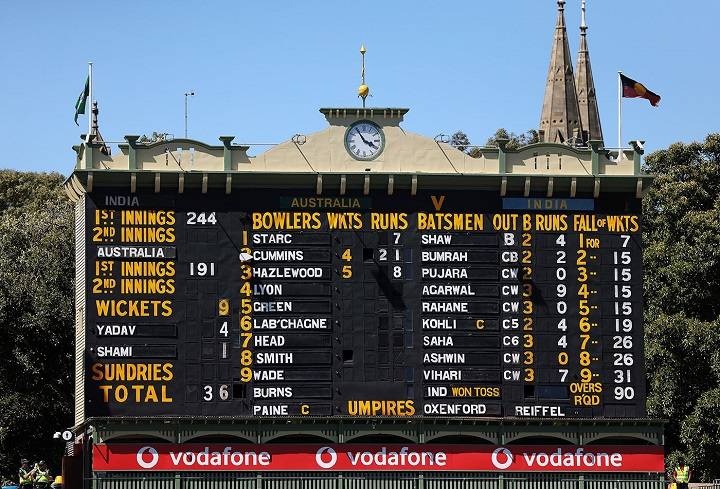
Cricket, often hailed as a gentleman’s game unfolds on expansive fields where skill, strategy, and mental acumen merge in a dynamic spectacle. The pursuit of a commendable cricket score is a journey that invites players to face bowlers, master the art of batting, and contribute to the collective success of their team. In this comprehensive exploration, we unravel the intricacies of cricket scoring, delving into the factors that shape performance and the benchmarks that define excellence on the cricket pitch.
Understanding Cricket Scores
The Basics: Runs, Wickets, and Overs
Runs:

The fundamental unit of scoring in cricket is the run. Batsmen accumulate runs by hitting the ball and completing runs between the wickets. Runs can be scored through a variety of shots, including boundaries (four runs) and sixes (six runs).
Wickets:
Wickets represent the primary means of dismissing batsmen. Bowlers aim to hit the stumps, dislodging the bails or inducing other forms of dismissal, such as catches or lbw (leg before wicket). The fall of a wicket brings a new batsman to the crease.
Overs:
An over is a set of six deliveries bowled by a single bowler. After six balls, another bowler from the same team takes over. The number of overs in an innings depends on the format of the game, with Test matches having unlimited overs per innings, One Day Internationals (ODIs) having a maximum of 50 overs per innings, and Twenty20 (T20) matches limited to 20 overs per innings.
Scoring Patterns: Singles, Boundaries, and Strategic Play
Singles and Twos:
Batsmen score singles and twos by running between the wickets. Quick running and smart placement of shots enable batsmen to rotate the strike and keep the scoreboard ticking.
Boundaries:
Boundaries are shots that reach the boundary rope, earning the batting team four runs (if the ball crosses the boundary on the full) or six runs (if the ball clears the boundary without bouncing).
Strategic Play:
Effective cricket scoring involves a blend of defensive and aggressive play. Batsmen strategically assess the field placements, bowler’s line and length, and the match situation to determine their approach.
Cricket Formats and Score Targets
Test Matches: The Ultimate Test of Endurance
Test Match Format:

Test matches are the longest format of the game, spanning a maximum of five days. Each team has two innings, and the team scoring the most runs over the two innings wins the match. Test cricket emphasizes endurance, skill, and strategic decision-making.
High Scores:
In Test matches, high individual scores and team totals are often celebrated. Batsmen strive for centuries (100 runs) or double centuries (200 runs) in an innings, while bowlers aim for five-wicket hauls or ten-wicket match hauls.
One Day Internationals (ODIs): Limited-Overs Intensity
ODI Format:
ODIs are limited-overs matches with each team facing a maximum of 50 overs per innings. The team with the highest total at the end of the match emerges victorious. ODIs prioritize a balance between batting and bowling prowess.
Run Rates:
In ODIs, run rates become crucial, with teams aiming to score at a brisk pace without losing wickets. Maintaining a high run rate while preserving wickets allows teams to set challenging targets or successfully chase down opponents’ scores.
Twenty20 (T20): The Thrill of Quickfire Action
T20 Format:
T20 cricket is the shortest format, with each team playing a maximum of 20 overs per innings. Known for its fast-paced and entertaining nature, T20 matches demand aggressive batting, inventive strategies, and dynamic fielding.
Explosive Innings:
T20 cricket often witnesses explosive individual innings, with batsmen aiming to score quickly and entertain the audience. Quick wickets for bowlers and tight fielding are equally pivotal in T20 matches.
Benchmarking Good Cricket Scores
Team Totals: Setting and Chasing Targets
Competitive Totals:
In all formats of cricket, setting a competitive total is essential for the batting team. The nature of the pitch, quality of opposition, and match conditions influence the target, with teams aiming to post scores that challenge the opposition.
Chasing Targets:
Successfully chasing a target requires a balance between aggression and caution. Teams strategize their chase based on the required run rate, available overs, and the dynamics of the match situation.
Centuries and Five-Wicket Hauls: Individual Brilliance
Batsmen’s Centuries:
Scoring a century in cricket is a remarkable achievement, signifying a batsman’s dominance and contribution to the team’s total. Centuries are celebrated milestones, and the best batsmen consistently convert starts into triple-figure scores.
Bowlers’ Five-Wicket Hauls:
Taking five wickets in an innings is a significant accomplishment for bowlers. It reflects their ability to dismantle the opposition’s batting lineup and contribute significantly to their team’s success.
Factors Influencing Cricket Scores
Pitch Conditions: Spin, Seam, and Variable Bounce
Spin-Friendly Pitches:
Pitches that assist spin bowlers often lead to lower scores, as batsmen find it challenging to play against the turn. Spin-friendly conditions demand a sound technique and patience from batsmen.
Seam Movement:
Seam-friendly pitches offer assistance to fast bowlers, allowing them to generate movement off the seam. Batsmen must adapt to the conditions, and bowlers exploit the seam movement to take wickets.
Variable Bounce:
Pitches with uneven bounce create challenges for batsmen. Uneven bounce can lead to dismissals through edges or lbw decisions, requiring batsmen to be vigilant and adapt quickly.
Bowling Quality: Pace, Swing, and Spin
Pace Bowlers:
Fast bowlers use pace and bounce to trouble batsmen. Express pace, well-directed bouncers, and late swing contribute to the effectiveness of pace bowling.
Swing Bowling:
Swing bowlers rely on the movement of the ball in the air. Conditions conducive to swing, such as overcast weather, offer opportunities for swing bowlers to exploit the new ball.
Spin Bowling:
Spinners use variations in flight, spin, and pace to deceive batsmen. Spin-friendly conditions and a well-disguised googly or flipper can lead to crucial breakthroughs.
Fielding Excellence: Catches, Run-Outs, and Diving Stops
Catching Prowess:
Catching is a fundamental aspect of fielding, and teams prioritize safe hands in crucial positions. Spectacular catches in the outfield or close-in catches around the batsman are game-changing moments.
Run-Out Opportunities:
Sharp fielding and accurate throws can result in run-outs, turning the tide of a match. Quick reflexes, precise throws, and strategic field placements are key elements of successful run-outs.
Diving Stops:
Fielders who save runs through diving stops or athletic efforts on the boundary contribute significantly to their team’s bowling performance. Every run saved is crucial in limited-overs cricket.
Strategies for Improving Cricket Scores
Batsmen’s Technique: Footwork, Shot Selection, and Temperament
Solid Footwork:
Batsmen with solid footwork are better equipped to handle various bowling conditions. A stable base allows for better shot execution and positions batsmen to play both front-foot and back-foot shots effectively.
Shot Selection:
Adapting shot selection to the situation is crucial. Batsmen must choose their shots based on the length, line, and pace of the delivery, as well as the field placements set by the opposition captain.
Temperament and Patience:
Maintaining composure during challenging phases, such as facing a barrage of bouncers or negotiating spin-friendly conditions, requires mental resilience. Patience and shot selection become paramount in such situations.
Bowlers’ Variations: Yorkers, Bouncers, and Spin Variations
Yorkers:
Fast bowlers use yorkers, deliveries pitched right at the batsman’s toes, as potent weapons to restrict scoring and take wickets. Executing yorkers accurately demands skill and control.
Bouncers:
Well-directed bouncers are used to unsettle batsmen and extract bounce from the pitch. Bouncers are often employed strategically, especially in limited-overs cricket, to disrupt the batsman’s rhythm.
Spin Variations:
Spinners employ variations in spin, flight, and pace to deceive batsmen. Leg-spinners, off-spinners, and left-arm spinners each have their unique set of variations to outsmart the opposition.
Fielding Drills: Agility, Reflexes, and Team Coordination
Agility Drills:
Fielders undergo agility drills to enhance their lateral movement, quick directional changes, and overall speed. Agility is crucial in the field, especially for players positioned in key areas.
Reflex Training:
Reflex training helps fielders react swiftly to sharp catches, fast-paced ground shots, or deflections. Sharp reflexes can result in game-changing moments, such as stunning catches or run-outs.
Team Coordination:
Effective communication and coordination among fielders are essential. Quick decision-making on who takes the catch, precise throws to the stumps, and strategic positioning contribute to successful fielding.
Mental Toughness: Handling Pressure Situations
Pressure Situations:
Cricket is often a game of pressure situations, be it facing a last-over chase or defending a modest total. Players with mental toughness thrive in such scenarios, making calm decisions and executing under pressure.
Visualization Techniques:
Mental visualization involves imagining successful scenarios, whether it’s a batsman visualizing a perfect cover drive or a bowler picturing a wicket-taking delivery. Visualization aids in building confidence and focus.
Related Post:
What Is A Balk In Baseball [With 12 Examples]
What’s A No Hitter In Baseball? [Complete Guide]
What’s is a Foul Ball? [Baseball & Softball]
In the vast and enthralling realm of cricket, the pursuit of an impressive score is an ever-evolving journey marked by skill refinement, teamwork, and an unwavering passion for the game. Whether it’s the joy of scoring a century, the satisfaction of taking a five-wicket haul, or the thrill of contributing to a successful run chase, cricket scores serve as a barometer of a player’s mastery over the complexities of the sport.
As cricketers aspire for improvement, they traverse not only the boundaries of the cricket field but the landscapes of their own capabilities and mental resilience. From the iconic stadiums where centuries are celebrated to the local grounds where unforgettable spells are bowled, the pursuit of a good cricket score transcends individual brilliance—it becomes a testament to the enduring spirit of the game. Whether a cricketer embarks on a quest for a record-breaking innings or simply revels in the joy of a perfectly executed yorker, the journey unfolds, and the allure of the next great score beckons, promising an ever-thrilling odyssey on the cricket pitch.