

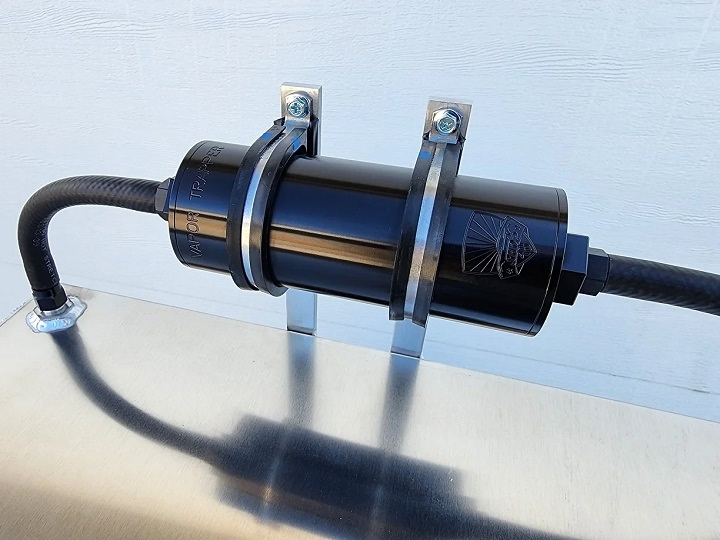
A charcoal canister is a key component of a vehicle’s evaporative emissions control system (EVAP), designed to reduce harmful fuel vapors from escaping into the atmosphere. By trapping and storing fuel vapors from the gas tank, the charcoal canister helps improve emissions, fuel efficiency, and environmental impact. But how does it work, and what are the signs of a failing charcoal canister? Let’s explore its function, symptoms of failure, and key maintenance tips.
Why is the Charcoal Canister Important?
A Quick Snapshot
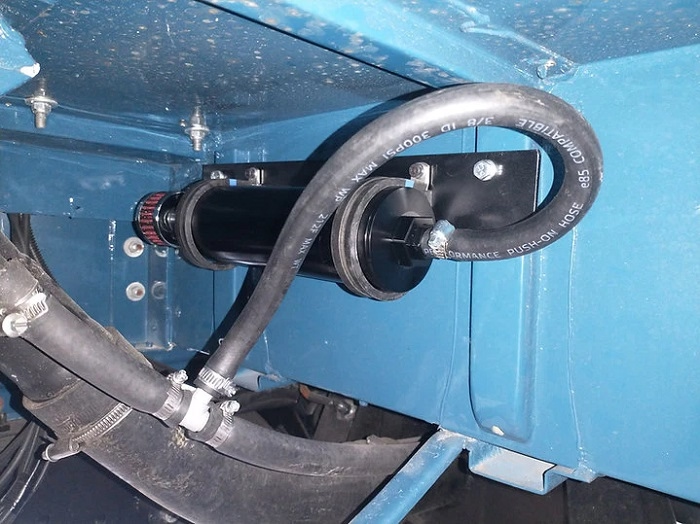
- Reduces Emissions – Prevents fuel vapors from polluting the air.
- Improves Fuel Efficiency – Helps prevent fuel loss through evaporation.
- Essential for Emission Compliance – Required for most modern vehicles.
- Works with the EVAP System – Helps regulate vapor flow back to the engine.
- Prevents Fuel Odor – Keeps strong gasoline smells from escaping.
How Does a Charcoal Canister Work?
Vapor Collection
- When fuel evaporates in the gas tank, vapors travel through vent lines to the charcoal canister.
- The activated charcoal absorbs and stores these vapors.
Purging Process
- When the engine is running, the purge valve opens, allowing stored vapors to be drawn into the intake manifold.
- The engine burns the vapors along with fuel for combustion.
Vent Control
- A vent valve regulates airflow, ensuring proper pressure balance in the fuel system.
- The system prevents excessive pressure buildup or vacuum conditions.
Symptoms of a Failing Charcoal Canister
Check Engine Light (CEL) Is On
- A faulty charcoal canister often triggers the check engine light due to EVAP system errors.
Strong Fuel Odor
- If the canister is cracked or clogged, fuel vapors may escape, leading to a noticeable gasoline smell near the vehicle.
Difficulty Refueling
- A malfunctioning charcoal canister can block fuel vapors from escaping, causing the fuel pump to shut off repeatedly while refueling.
Poor Engine Performance
- A clogged or damaged canister can cause:
- Rough idling
- Hesitation during acceleration
- Reduced fuel efficiency
Failed Emissions Test
- Since the charcoal canister is crucial for emissions control, a malfunctioning unit can cause a failed emissions test due to excessive hydrocarbon emissions.
Common Causes of Charcoal Canister Failure
- Overfilling the Gas Tank – Topping off the tank can flood the canister with liquid fuel, damaging the charcoal.
- Age and Wear – Over time, the charcoal can break down, reducing its ability to absorb vapors.
- Clogged or Stuck Valves – If the purge or vent valve malfunctions, the canister may not function properly.
- Cracks or Physical Damage – Impact damage or exposure to harsh conditions can cause leaks.
How to Test a Charcoal Canister
Visual Inspection
- Look for cracks, loose hoses, or fuel residue around the canister.
Blow Test
- Disconnect the purge valve hose and try blowing air into the canister.
- If air doesn’t pass through, the canister is likely clogged.
EVAP System Smoke Test
- A professional mechanic can use a smoke test machine to check for leaks in the EVAP system.
Replacement and Maintenance
When to Replace a Charcoal Canister?
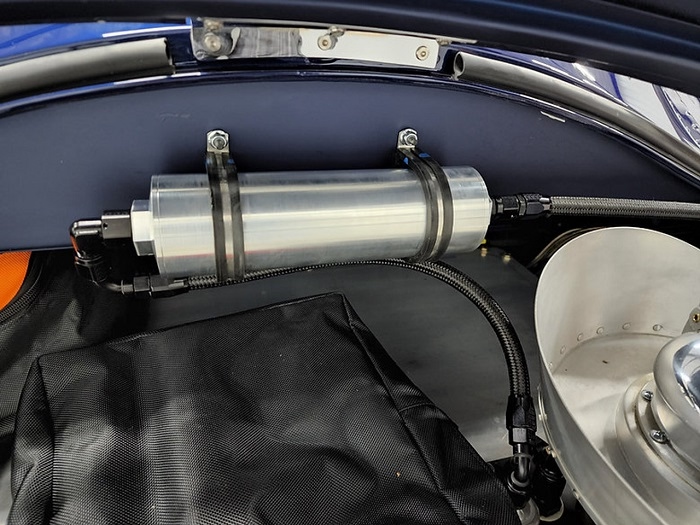
- Typically lasts 5–10 years, but replacement is needed if symptoms appear.
- If a purge or vent valve fails, it may be replaced separately.
How Much Does a Replacement Cost?
- Parts Cost: $100–$400 depending on the vehicle.
- Labor Cost: $50–$200 depending on difficulty.
Tips to Extend Charcoal Canister Life
✅ Avoid overfilling the fuel tank.
✅ Keep the fuel cap properly tightened.
✅ Regularly inspect for fuel odors or EVAP leaks.
✅ Address check engine light codes promptly.
Pros and Cons of a Charcoal Canister
Pros:
✅ Reduces harmful emissions
✅ Improves fuel efficiency
✅ Helps vehicles meet emission regulations
✅ Prevents fuel odors from escaping
Cons:
❌ Can clog or fail over time
❌ Expensive to replace in some models
❌ Failure can cause performance issues and emissions failures
FAQs
Can I drive with a bad charcoal canister?
Yes, but it can cause engine performance issues, fuel odors, and emissions failures.
How do I know if my charcoal canister is clogged?
Look for symptoms like check engine light, difficulty refueling, and strong fuel odor.
Can a bad charcoal canister affect fuel economy?
Yes, a faulty EVAP system can cause poor fuel efficiency and engine hesitation.
Does a charcoal canister need regular maintenance?
No specific maintenance is required, but avoid overfilling the fuel tank to prevent damage.
Will a bad charcoal canister cause a failed emissions test?
Yes, because it plays a key role in reducing hydrocarbon emissions.
A charcoal canister is a vital part of a vehicle’s emissions control system, helping reduce fuel vapors and improve efficiency. While it doesn’t require regular maintenance, issues like fuel odor, check engine light, and rough idling may indicate a failing canister. Replacing it promptly ensures better performance and compliance with emission standards.