

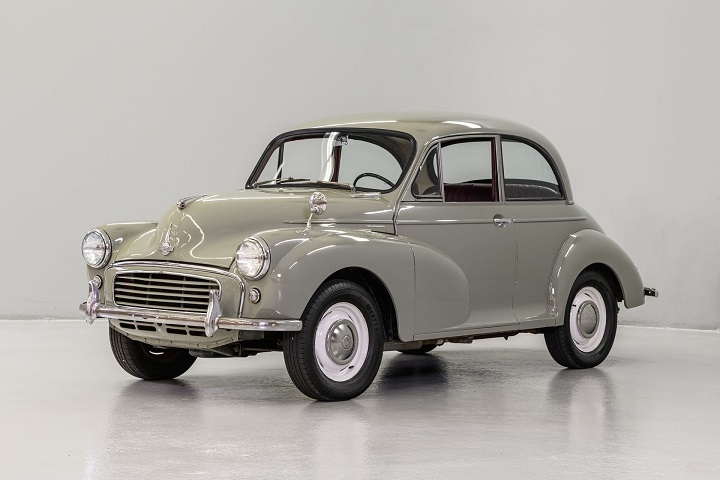
Every country has its people’s cars. The Beetle belonged to Germany. The Fiat 500 belonged to Italy. The Morris Minor car belonged to Britain.
In 1948, the Morris Minor car came along and was one of Britain’s finest 20th-century cars. It was simple. It was affordable. It was stylish in its time. It was bought by families. It was used by companies. Nowadays, it is coveted by collectors.
The entire history of the Morris Minor car is discussed throughout this book. From its creation and forms to its cultural value and worth as a collection piece with current collectors.
History of the Morris Minor Car
The Man Who Created It
Alec Issigonis created the Morris Minor car. He went on to create the Mini. What he wanted to do was not complex. Create a small car that was inexpensive, economical, and modern.
Debut in 1948
The car initially made an appearance at the Earls Court Motor Show. It was successful. Individuals loved its thin appearance, roomy cabin, and affordability.
Name and Identity
The name “Minor” was inherited from previous models of Morris. It referred to the fact that it was small. But the Morris Minor vehicle grew bigger than anyone ever projected.
Design Features of the Morris Minor Vehicle
Exterior
- Round fenders
- Split or single front windscreen depending on model year
- Compact but neat silhouette
- Distinct grille pattern
Interior
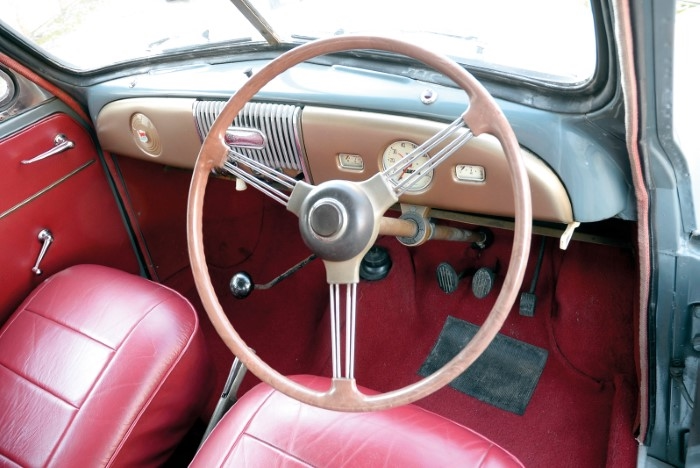
- Spacious relative to others
- Basic dash styling
- Plush family-sized seating
- Massive windows for unrestricted viewing
Mechanical Specification
- Rear-wheel drive
- Four-cylinder engine
- Independent front suspension
- Light steering
Why It Was Different
The Morris Minor car delivered modern handling. It was safe in proportion to previous designs. It was utilitarian in appearance but friendly. It was a car that people grew to like.
Morris Minor Car Models
Morris Minor Series MM (1948–1953)
The first model. It was equipped with a side-valve engine. It had a split windscreen. Production began slowly but demand grew.
Morris Minor Series II (1952–1956)
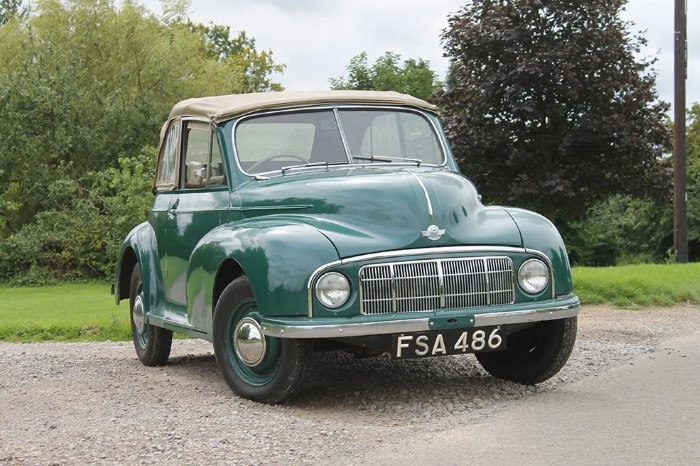
Had the overhead valve A-series engine. Better performance. Saloon, convertible, and Traveller estate models available.
Morris Minor 1000 (1956–1971)
Most common model. It had a one-piece windscreen. Slightly larger engines up to 1098cc. Larger rear window for improved visibility. Made in large quantities.
Body Styles
- Saloon: Standard family vehicle
- Convertible: Also referred to as the “Tourer”
- Traveller: Estate car with wooden structure in the back
- Van and Pickup: Used for postal and commercial purposes
Popularity of the Morris Minor Car
Affordable Price
It was cheaper than most rivals. Families were able to purchase one without getting a loss.
Practicality
Roomy for its size. Easy to handle. Cheap to maintain.
Versatility
It was used as a family car, delivery van, or fashionable convertible. Not many cars offered so much flexibility.
Export Success
The Morris Minor car was exported worldwide. It was successfully sold in Australia, New Zealand, India, and Africa.
Cultural Impact of the Morris Minor Car
Daily Life
It was a fixture of daily life in Britain for decades. It was learned in to drive. Families took it on holiday. Tradesmen moved goods about in vans.
Media and Pop Culture
It arrived on the cinema screen, TV, and commercials. Its shape was immediately recognizable.
Symbol of Britain
The Mini had been the emblem of the 1960s, but the Morris Minor car was the emblem of post-war Britain. It symbolized improvement and brighter times.
Performance and Driving Experience
Engines
Early engines were lacking in punch but the car was light. Later models based on the 1098cc engine handled better.
Handling
Independent front suspension gave good handling. Light steering made it easy in town driving.
Comfort
Not cushy, but comfortable for everyday use. Suspension was good at bumps.
Speed
Never swift. But speed was never the aim. The Morris Minor car was engineered to be reliable, rather than to be fast.
Restoration and Collecting
Collector’s Market
Nowadays, collectors restore and rebuild Morris Minors. Traveller and Convertible versions are especially sought after.
Availability of Parts
Parts are easily available from suppliers and clubs. Repair is easy in this way compared to most other classics.
Price Range
Project cars will cost a few thousand pounds. Restored examples can command £10,000–£20,000 based on the model and condition.
Community
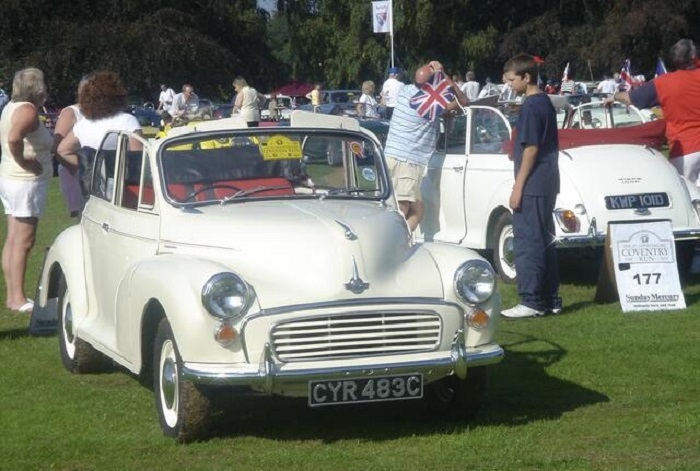
Clubs like the Morris Minor Owners Club keep collectors. Events bring enthusiasts together.
Pros and Cons of the Morris Minor Car
Pros
- Classic look
- Budget classic to buy and repair
- First-class community support
- Smooth for its era
- Massive historical importance
Cons
- Underpowered compared to contemporary cars
- Timber frame on Traveller models need maintenance
- No modern safety features
- Sluggish on motorways
Why the Morris Minor Car Endures
Nostalgia
To some, it was the first family car. The reason that people now can have one and look back, makes it unique.
Simplicity
Simple to repair. Simple to maintain. A car for garage mechanics.
Style
Its swooping profile is still adorable. It slices through modern traffic.
Symbol
It is an era when motoring was a process of pleasure and not complication.
Legacy of the Morris Minor Car
The Morris Minor was the first-ever British car to sell one million. It proved that one could have both cheap and stylish and functional cars. Its designer, Alec Issigonis, then went on to design the Mini, another British legend.
The Morris Minor motor car is still a link to Britain’s car heritage. It isn’t a motor car. It is history.
FAQs
What is a Morris Minor motor car?
It was a small British motor car that was made between 1948 and 1971 by Alec Issigonis.
Why was the Morris Minor motor car popular?
It was affordable, practical, and trendy. Family motor cars and companies loved it.
Is the Morris Minor motor car collectable today?
Yes. Restored models are sought after, especially Traveller and Convertible models.
What were the Morris Minor car engine sizes?
Engines ranged from 918cc side-valve engines to the 1098cc A-series engine.
Why is the Morris Minor car of historical importance?
It was Britain’s first million-selling car and an icon of post-war reconstruction.
The Morris Minor motor vehicle was not an appliance. It was the people’s car of Britain. It carried families, workers, and dreams across the decades of change. Its perfection, simplicity, and practicality turned it into an heirloom.
Today, the Morris Minor car rests in collector storage facilities, club gatherings, and fond memories. It continues to prove that automobiles need not be powerful or extravagant to win hearts. They simply need honesty, charm, and practicality.