

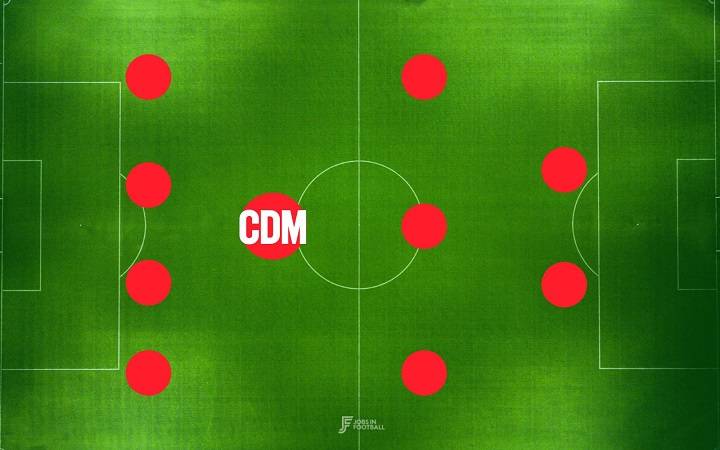
Soccer, the beautiful game, unfolds on expansive pitches where strategy, skill, and teamwork converge in a dynamic ballet. Amidst the various positions that players assume on the field, the role of a CDM, or Central Defensive Midfielder, stands out as a linchpin in the team’s tactical apparatus. In this comprehensive exploration, we delve into the intricacies of what CDM means in soccer, examining the responsibilities, skills, and impact of players who don the CDM mantle.
Understanding the Soccer Lexicon: Deciphering CDM
Defining CDM: Central Defensive Midfielder

The acronym CDM stands for Central Defensive Midfielder, a position that occupies the central part of the midfield and primarily focuses on defensive duties. This player serves as a shield for the team’s defense, acting as a crucial link between the backline and the more attacking-minded midfielders and forwards.
- Tactical Versatility and Defensive Prowess
- A CDM is renowned for their tactical versatility, contributing to defensive solidity while possessing the vision to initiate offensive plays. This dual role demands a unique skill set that sets CDMs apart in the intricate landscape of soccer positions.
- Alternative Terms: Defensive Midfielder, Holding Midfielder
- While CDM is the widely accepted term, these players are also referred to as Defensive Midfielders or Holding Midfielders. These alternative descriptors underscore the player’s emphasis on defensive responsibilities and their pivotal role in holding the team’s structure.
The Role of a CDM: Orchestrating Defense and Attack
Defensive Shield: Breaking Up Opposition Attacks
A paramount responsibility of a CDM is to act as a defensive shield, disrupting the flow of the opposition’s attacks and providing a robust barricade in front of the team’s defense.
- Interceptions and Tackling Mastery
- CDMs showcase their defensive prowess through adept interceptions and well-timed tackles. Their ability to read the game and make crucial defensive interventions is instrumental in thwarting the opponent’s progress.
- Positional Awareness and Zonal Coverage
- Positional intelligence is a hallmark of an effective CDM. These players exhibit acute awareness of their positioning, ensuring comprehensive zonal coverage to deny space and options to the opposition.
Ball Distribution: Initiating Attacks from Deep
While defense is a primary focus, CDMs are not limited to a purely defensive role. They play a pivotal part in initiating attacks, acting as deep-lying playmakers who distribute the ball with precision.
- Vision and Passing Accuracy
- CDMs exhibit exceptional vision, often spotting opportunities for forward passes that unlock opposition defenses. Their passing accuracy, both in short and long-range distribution, is critical for transitioning from defense to attack.
- Building from the Back: Linking Defense to Midfield
- A key facet of a CDM’s role is to serve as a link between the defensive and midfield units. By building play from the back, CDMs contribute to the team’s ability to control possession and dictate the tempo of the game.
Tactical Discipline: Balancing Defense and Attack
The effectiveness of a CDM lies in their ability to strike a delicate balance between defensive diligence and offensive contribution. Tactical discipline is paramount as these players navigate the complex demands of the midfield.
- Reading the Game: Anticipation and Decision-Making
- CDMs showcase an innate ability to read the unfolding dynamics of the game. Anticipating opposition movements and making split-second decisions on when to press defensively or instigate an attacking sequence is a testament to their tactical acumen.
- Covering Defensive Gaps and Supporting Attacks
- Whether plugging defensive gaps or providing an additional passing outlet in attack, CDMs exhibit tactical intelligence by adapting their positioning based on the ebb and flow of the game.
Key Skills of a CDM: The Arsenal of a Midfield Maestro
Defensive Skills: A Wall in Midfield

CDMs are revered for their defensive prowess, and a set of specific skills distinguishes them as formidable barriers in the midfield battleground.
- Interception Mastery: Reading the Play
- A CDM’s ability to intercept passes and cut off opposition supply lines requires an astute reading of the play. Anticipation and quick reactions enable them to disrupt the opponent’s build-up.
- Tackling Precision: Winning Possession Back
- Tackling is a fundamental skill, and CDMs excel in executing well-timed challenges to dispossess opponents. Clean tackles that regain possession without conceding fouls highlight the skillful nature of their defensive play.
Passing Proficiency: Orchestrating from Deep
The role of a CDM extends beyond defense, with a significant emphasis on precise passing to set the stage for attacking maneuvers.
- Short and Long-Range Passing: Dictating Tempo
- CDMs exhibit proficiency in both short and long-range passing. Whether distributing the ball to nearby teammates or launching accurate long balls to initiate counter-attacks, their passing repertoire is diverse.
- Visionary Playmaking: Unlocking Opposition Defenses
- Vision is a hallmark of exceptional CDMs. The ability to spot openings, make incisive passes, and contribute to the creation of goal-scoring opportunities elevates these players to the status of midfield architects.
Physical and Mental Attributes: The Complete Package
To thrive in the demanding role of a CDM, players must possess a blend of physical prowess and mental fortitude that complements their technical skills.
- Endurance and Stamina: Covering Vast Midfield Territories
- CDMs are known for their work rate and ability to cover vast expanses of the midfield. Endurance and stamina are crucial, ensuring they remain effective throughout the duration of a match.
- Composure under Pressure: Thriving in Intense Situations
- The ability to maintain composure under pressure is a defining trait. CDMs often find themselves in high-pressure situations, and their calm demeanor allows them to make sound decisions even when the stakes are high.
CDMs in Action: Spotlight on Notable Players
N’GoloKanté: The Energetic Enforcer
N’GoloKanté, known for his boundless energy and tenacity, exemplifies the modern CDM. His ability to cover ground, win tackles, and contribute to attacking plays has made him a linchpin for both club and country.
- Dynamic Defensive Play: Interceptions and Ball Recovery
- Kanté’s incredible work rate allows him to make crucial interceptions and recover possession for his team. His defensive contributions often serve as the foundation for counter-attacks.
- Versatile Offensive Contributions: Box-to-Box Presence
- Kanté’s box-to-box style sees him contribute not only defensively but also in supporting attacks. His ability to drive forward with the ball and participate in offensive phases adds a dynamic dimension to his play.
Sergio Busquets: The Maestro of Control
Sergio Busquets, a stalwart for FC Barcelona and the Spanish national team, epitomizes the importance of controlled possession and intelligent positioning for a CDM.
- Elegant Ball Distribution: Orchestrating Midfield Play
- Busquets’ passing accuracy and ability to dictate the tempo of the game showcase the playmaking aspect of a CDM’s role. His elegant yet effective style of play has been instrumental in Barcelona’s success.
- Positional Intelligence: Anchoring the Midfield
- Busquets’ mastery lies in his positional awareness, providing a stable anchor for his team in midfield. His ability to read the game and disrupt opposition attacks has been a cornerstone of his illustrious career.
The Evolution of the CDM Role: Modern Trends and Adaptations
From Destroyers to Deep-Lying Playmakers
The role of CDMs has evolved over the years, transcending the traditional image of a midfield destroyer to encompass deep-lying playmaking responsibilities.
- Regista Influence: Deep-Lying Playmaker Traits
- Influenced by the “regista” role in Italian football, modern CDMs often showcase traits associated with deep-lying playmakers. Their involvement in initiating attacks and setting the tempo reflects a broader skill set.
- Dual-Threat Dynamics: Defensive Solidity and Creative Spark
- The contemporary CDM is a dual threat, combining defensive solidity with a creative spark. This evolution aligns with the shift towards possession-based football, where midfielders play a pivotal role in building from the back.
Related Post:
Setting the Stage for Epic Nights: Crafting Custom Dance Floors for Unforgettable DJ Events
Exploring Water Polo Positions: A Comprehensive Guide to Player Roles and Strategies
Decoding the Scoreboard: Unraveling Points in Hockey
As we unravel the layers of what CDM means in soccer, it becomes evident that these players are more than defensive enforcers—they are midfield architects, strategic masterminds, and indispensable components of a team’s success. From breaking up opposition attacks to orchestrating intricate passing sequences, CDMs command the midfield with a blend of skill, intelligence, and unwavering commitment.
In the ever-evolving landscape of soccer tactics, the role of a CDM continues to shape and redefine itself, adapting to the demands of modern football. Whether it’s the energetic ball-winning style of N’GoloKanté or the composed orchestration exemplified by Sergio Busquets, CDMs leave an indelible mark on the sport, influencing outcomes and contributing to the beautiful symphony of the game.
So, the next time you witness a player diligently patrolling the central midfield, breaking up attacks, and initiating plays with precision, recognize the essence of what CDM means—a linchpin, a maestro, and an integral part of the captivating drama that unfolds on the soccer field.