

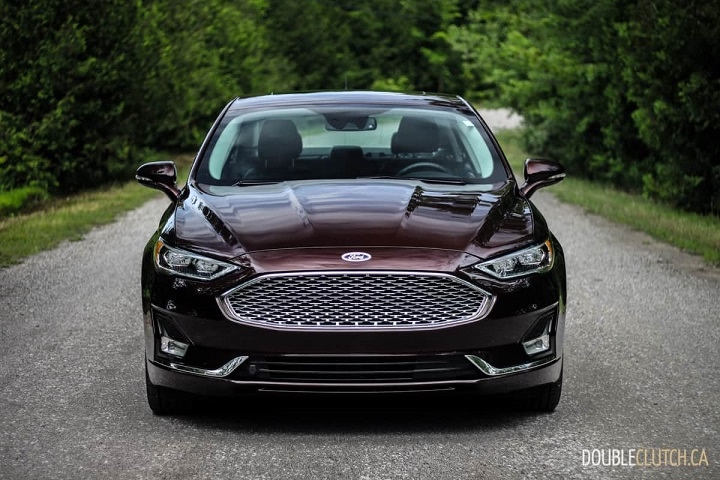
The 2019 Ford Fusion was one of the final models before Ford phased out most of its sedans, and it’s still a compelling option in the used car market. With multiple powertrain choices, a spacious interior, and sharp styling, the 2019 Fusion delivers a smooth driving experience for commuters and small families alike. If you’re considering this vehicle, here’s a complete personal guide to its features, strengths, issues, and ownership tips.
Why Consider the 2019 Fusion?
A Quick Snapshot
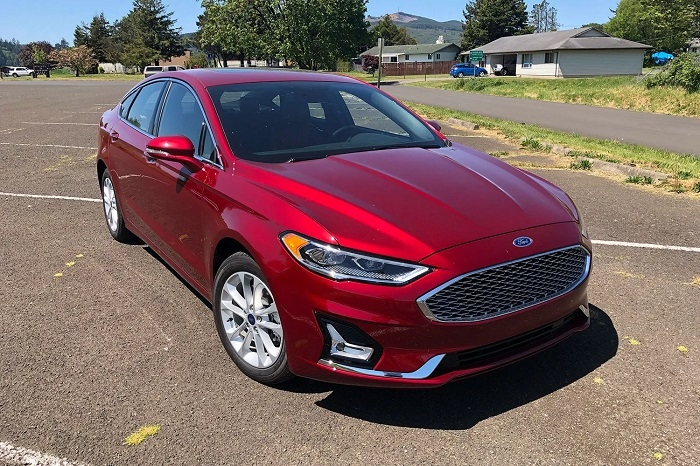
What It Is: Midsize sedan with available gas, hybrid, and plug-in hybrid powertrains
What’s New: Updated grille, standard Co-Pilot 360 driver aids, streamlined trim lineup
Known Issues: Transmission hesitation, infotainment glitches, battery drain on hybrids
Trims Available: S, SE, SEL, Titanium, Sport, Hybrid, and Energi
DIY Friendly? Yes for routine service; some electrical and hybrid systems need expertise
2019 Ford Fusion Highlights
Multiple Powertrain Choices
From fuel-efficient four-cylinders to a plug-in hybrid, the Fusion offers an engine for nearly every driver.
- 2.5L I4 (173 hp): Standard on S trim
- 1.5L Turbo I4 (181 hp): SE and SEL
- 2.0L Turbo I4 (245 hp): Titanium
- 2.7L V6 (325 hp): Sport (discontinued mid-year but still available used)
- Hybrid and Energi: Electric motors paired with a 2.0L I4
Pros: Wide range of performance and efficiency options
Cons: Base 2.5L engine feels underpowered
Comfortable Ride and Composed Handling
The 2019 Fusion offers a refined suspension setup that balances comfort and sportiness. The steering is responsive, and the cabin remains quiet at highway speeds.
Pros: Excellent ride quality, confident in corners
Cons: Sport model stiffer than other trims
Modern Tech and Interior Design
Even base trims come equipped with a touchscreen, Bluetooth, and Ford’s Co-Pilot 360 suite. Higher trims get SYNC 3, navigation, heated/cooled seats, and more.
Pros: Intuitive tech, driver-focused layout
Cons: Base infotainment system lacks responsiveness
Advanced Safety Features Standard
Ford made Co-Pilot 360 standard for 2019. That includes automatic emergency braking, lane-keeping assist, blind-spot monitoring, and a rearview camera.
Pros: Excellent safety value across trims
Cons: Some features are overly sensitive or give false alerts
Plug-In Hybrid (Energi) Adds Efficiency
The Fusion Energi offers limited electric-only driving and transitions smoothly into hybrid mode.
Pros: Up to 25 miles of electric range
Cons: Trunk space is significantly reduced due to battery pack
Common Issues with the 2019 Fusion (So Far)
Transmission Hesitation
Some owners report delayed gear changes or rough shifts, particularly on turbocharged models.
Fix: Dealer reprogramming often resolves it; check fluid condition if symptoms persist
Infotainment Freezing or Lag
SYNC 3 can occasionally freeze or delay, especially when using Apple CarPlay or Android Auto.
Fix: Perform system reset or have dealer update software
Hybrid Battery Drain (Energi)
Plug-in models have experienced faster-than-expected battery drain if not charged consistently.
Fix: Keep charging routine regular; battery module may require service under warranty
HVAC Blower Motor Noises
Unusual sounds from the ventilation system are occasionally reported in SE and SEL trims.
Fix: Replace blower motor if noise persists after cleaning debris
Door Latch Recalls
Some units were included in recalls for door latches that may fail in hot climates.
Fix: Check VIN and confirm if recall repair has been completed
Maintenance and Reliability Outlook
Routine Maintenance Schedule
- Oil Change: Every 7,500 miles (5,000 for turbo or hybrid models)
- Air Filter: Replace every 15,000–30,000 miles
- Coolant and Brake Fluid: Check every 30,000 miles
- Transmission Fluid: Inspect at 60,000 miles
- Hybrid Battery: Monitor with regular diagnostic scans
Fuel Economy
- 2.5L I4: ~21 mpg city / 31 mpg highway
- 1.5L Turbo: ~23 mpg city / 34 mpg highway
- 2.0L Turbo: ~21 mpg city / 31 mpg highway
- Hybrid: ~43 mpg city / 41 mpg highway
- Energi: ~97 MPGe (electric + gas combined)
Reliability: Respectable
With regular maintenance, the 2019 Fusion delivers solid long-term reliability. The base engine is durable, and the hybrid systems are refined from previous Ford designs.
Pros and Cons of the 2019 Ford Fusion
Pros:
✔ Multiple powertrains, including hybrid and plug-in options
✔ Comfortable, quiet ride
✔ Excellent safety tech standard
✔ Good value on the used market
✔ Stylish exterior with a premium feel
Cons:
✘ Some infotainment bugs
✘ Small trunk in Energi model
✘ Transmission hesitation in turbos
✘ Discontinued model = limited long-term support
FAQs
Is the 2019 Ford Fusion a reliable used car?
Yes. Most trims have proven dependable, especially the 1.5L turbo and hybrid models with regular care.
Which Fusion trim offers the best value?
The SE or SEL trims offer the best mix of features, efficiency, and comfort without the higher price tag of the Titanium or GT.
Does the Fusion Energi need to be charged every day?
Not necessarily. It can run as a regular hybrid when the battery depletes, but regular charging is needed to get full EV benefits.
Are there any major recalls on the 2019 Fusion?
Some models were affected by door latch recalls and powertrain control module updates, but most have already been addressed.
Why did Ford stop making the Fusion?
Ford shifted focus to SUVs and trucks, discontinuing sedans like the Fusion despite their popularity among certain drivers.
The 2019 Ford Fusion is a well-rounded, underrated midsize sedan that still holds its own in the used market. With multiple engine choices, a comfortable ride, generous safety tech, and attractive styling, it remains a strong option for commuters, families, and eco-conscious drivers. Just be mindful of the infotainment and transmission quirks, and you’ll likely enjoy years of smooth, confident driving.